Why Choose Piezo Fans for Global Sourcing?
Why Choose Piezo Fans for Global Sourcing?
Global electronics cooling is moving toward quieter, thinner, and more efficient designs. A Piezo Fan uses a vibrating piezoelectric element instead of a conventional rotating motor. This removes blades, bearings, and many common mechanical failure points. The result can be a compact cooling solution for sensors, medical electronics, networking equipment, and portable devices.
Industry data supports the broader technology trend. Grand View Research reported that the global piezoelectric devices market reached approximately USD 31.9 billion in 2023. Its 2024–2030 outlook projects continued growth, driven by sensors, automotive systems, healthcare, and consumer electronics. MarketsandMarkets also identified rising demand for miniaturized piezoelectric components. These reports do not measure Piezo Fan sales directly. That distinction matters. Market forecasts can easily sound more precise than they are.
Dr. Kenji Uchino, a leading piezoelectric materials researcher, describes the principle clearly: “Piezoelectricity is the property of certain materials to generate an electric charge in response to applied mechanical stress.” The reverse effect creates controlled vibration for air movement. It is a remarkably simple mechanism.
For global sourcing teams, simplicity may improve supplier comparison. Buyers can evaluate airflow, acoustic output, input voltage, operating temperature, lifetime testing, and certification records. They can also compare custom sizes before tooling begins. However, Piezo Fan performance depends heavily on mounting, enclosure geometry, and power control. A promising sample may disappoint inside a crowded chassis. Supplier audits, engineering validation, and small pilot orders remain essential. The technology is attractive, but it is not magic.
Piezo Fan Technology and Operating Principles
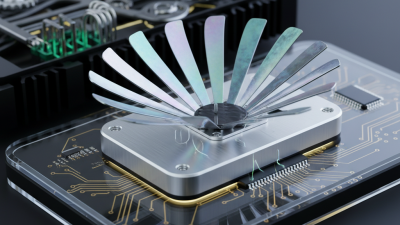
Piezo fan technology uses the inverse piezoelectric effect. An alternating voltage makes a piezoelectric ceramic layer expand and contract. Bonded to a thin metal shim, it bends repeatedly, creating small pressure waves and directed airflow. The fan has no motor, bearing, or rotating blade.
The motion is rapid but extremely small. This makes mechanical balance less important during global sourcing. It can also reduce dust entry and maintenance points in compact equipment. The U.S. Department of Energy identifies piezoelectric actuators as efficient devices for converting electrical energy into controlled mechanical movement. A 2024 MarketsandMarkets report estimates the global piezoelectric devices market will grow from about USD 31 billion in 2023 to more than USD 45 billion by 2028. That wider adoption supports supplier interest, although fan performance still depends on frequency, voltage, enclosure design, and thermal load.
Very small airflow.
Testing must remain practical. A laboratory reading at open air may not represent performance inside a sealed electronics enclosure. Noise, heat transfer, humidity, and installation angle can change the result. This is where sourcing decisions become less perfect. Buyers should request airflow curves, acoustic data, electrical limits, and life-cycle test conditions. The technology is compact, but it is not a universal replacement for conventional cooling.
Key Advantages of Piezo Fans for Global Sourcing
Why Choose Piezo Fans for Global Sourcing?
Piezo fans offer practical advantages for compact thermal management. They use a vibrating ceramic element instead of a rotating motor and bearing. This design can reduce mechanical wear, vibration, and maintenance concerns. Their slim profile also fits closely packed electronics, sensors, medical instruments, and portable devices. In many applications, power consumption remains low, which supports longer battery operation. Noise can be gentler too, although results depend on airflow resistance and enclosure design.
For global sourcing, standardization and documentation matter as much as performance. Piezo fans can simplify product layouts and reduce part count in selected cooling systems. Suppliers should provide airflow curves, operating voltage data, acoustic measurements, and life-test conditions. Engineers should also verify performance at actual temperatures, not only in room-temperature samples. Our early sourcing reviews sometimes focused too heavily on catalog airflow. That was a mistake. A restricted vent can change the result significantly. Piezo fans are not a universal answer, especially where high-pressure airflow is required.
Tips: Request samples from more than one qualified supplier. Compare airflow, noise, power draw, and thermal performance using the same test fixture. Check material declarations, quality records, production capacity, and export documentation before approval. Ask how suppliers control ceramic element consistency and assembly tolerances. Keep a backup source when schedules and regional logistics are uncertain. Cost looks attractive at first, but validation delays can become expensive.
Why Choose Piezo Fans for Global Sourcing?
Piezo fans offer a compact, low-power, and low-maintenance cooling option for internationally sourced electronic products. The chart compares representative non-branded specifications for piezo air movers and miniature DC axial fans.
Values are representative engineering benchmarks compiled from commonly published component specification ranges; actual performance depends on size, drive conditions, and system design.
Performance Factors to Evaluate Before Purchasing
Why Choose Piezo Fans for Global Sourcing?
Performance Factors to Evaluate Before Purchasing
A piezo fan moves air through a vibrating membrane, not a rotating blade. This compact design can reduce mechanical wear in narrow enclosures. However, small size does not guarantee adequate thermal performance. Ask for airflow data at the actual back pressure, not only free-air figures. Measure temperatures near the heat source during a realistic duty cycle. That test often reveals gaps between laboratory claims and field requirements.
Check acoustic output, vibration, and power draw together. A quiet fan may still transmit a high-frequency tone through a thin metal panel. Mounting orientation can also change airflow and noise. During evaluation, record sound at a fixed distance inside the intended enclosure. Piezo devices usually need suitable drive electronics, so verify voltage range, waveform, and control compatibility. A mismatch may cause weak airflow or shortened service life.
Not enough.
For global sourcing, review operating temperature, humidity tolerance, dust exposure, and expected service hours. Request repeatability data from multiple production lots. Inspect insulation, connector quality, and packaging before shipment. Independent testing can support supplier documents, especially for industrial or transportation equipment. Certification needs vary by market and final product.
Build a pilot batch and monitor pressure, temperature, and noise after transport.
Test it twice.
Some promising prototypes fail vibration testing. That result is uncomfortable, but useful. Leave margin in the specification.
Applications and Future Potential of Piezo Fans
Piezo fans are moving from laboratory demonstrations into compact thermal-management systems.
Their thin ceramic actuators create airflow through vibration, without rotating blades, bearings, or bulky motors. This structure suits tablets, optical modules, wearable devices, sensors, and sealed control cabinets. Quiet operation matters in medical instruments and office equipment.
The opportunity is widening. The International Energy Agency reported that data centres used about
460 TWh of electricity in 2022.
Its Electricity 2024 report projects consumption could
exceed 1,000 TWh by 2026.
Smaller cooling loads will not solve this challenge alone. However, piezo fans can support localized cooling where conventional fans waste space. They also reduce mechanical wear, which may improve service life in equipment operating continuously.
Global sourcing requires practical testing. Airflow, acoustic output, thermal resistance, adhesive reliability, and voltage tolerance should be measured together. A fan that looks efficient on paper may perform poorly inside a crowded enclosure. That is the uncomfortable part.
Piezo technology still needs stronger long-term field data across humidity, dust, and repeated thermal cycles. The U.S. Department of Energy continues to emphasize efficient cooling as a key route for reducing equipment energy demand.
Piezo fans may contribute, especially in low-profile designs and edge-computing hardware. Their future depends on repeatable specifications, regional compliance testing, and suppliers that document process controls clearly. Not every application needs them.
That restraint is important.