2026 Best Piezo Fan Innovations Transforming Cooling Solutions?
In 2026, the landscape of cooling solutions is set to change dramatically. Piezo Fan technology is at the forefront of this transformation. These innovative fans utilize piezoelectric elements to create efficient airflow while minimizing noise. This is not just an improvement; it’s a revolution in cooling systems.
Many industries are embracing Piezo Fans. From electronics to automotive, their compact design offers a unique advantage. They consume less power, which is crucial for energy savings. However, widespread adoption raises questions about reliability and longevity. How will these fans perform under constant use?
Despite their promise, Piezo Fans are not without challenges. As manufacturers experiment, inconsistencies may arise. Some may deliver exceptional performance, while others falter. It’s essential to critically evaluate these innovations. Only then can we harness their full potential in transforming cooling solutions.

Overview of Piezo Fan Technology and Its Evolution in Cooling Solutions
Piezo fan technology has evolved significantly over the past decade. Originally, these fans used simple piezoelectric actuators to generate airflow. Today, they incorporate advanced materials and design techniques. This evolution allows for increased efficiency and lower power consumption. Research suggests that modern piezo fans can achieve up to 30% more cooling efficiency than traditional fans.
The current trend in cooling solutions highlights the growing importance of miniaturization and noise reduction. Reports indicate that the global cooling fan market is projected to reach $4.5 billion by 2026. Among this, piezoelectric fans are gaining traction. With their compact size, they can fit into tighter spaces. Yet, the technology still has limitations. The manufacturing costs can be higher than traditional cooling solutions.
For engineers, the challenge lies in maximizing performance while minimizing costs. Some piezo fans may exhibit inconsistent airflow at varying speeds. This inconsistency can hinder their adoption in certain applications. Continuous innovation is key to overcoming these hurdles. The potential of piezo technology in thermal management is immense, but it requires refinement.
2026 Best Piezo Fan Innovations Transforming Cooling Solutions
| Innovation |
Cooling Efficiency (%) |
Noise Level (dB) |
Power Consumption (W) |
Material Used |
Application Area |
| Advanced Piezoelectric Actuators |
95 |
25 |
2 |
Ceramic Composites |
Consumer Electronics |
| Miniature Piezo Fans |
90 |
30 |
1.5 |
Polymer Blends |
Wearable Devices |
| Smart Piezo Fan Arrays |
98 |
22 |
3 |
Metal Alloys |
Data Centers |
| Dynamic Cooling Modules |
92 |
28 |
4 |
Silicone Materials |
Automotive |
| High-Performance Piezo Fans |
94 |
24 |
2.2 |
Carbon Fiber |
Industrial Systems |
Key Innovations in Piezoelectric Materials Enhancing Fan Efficiency
Piezoelectric materials are revolutionizing cooling solutions. Their ability to convert electrical energy into mechanical movement makes them ideal for fan technology. These innovations lead to smaller, lighter fans that maintain high performance. This enhances efficiency without increasing energy costs.
One significant advance is the development of flexible piezo materials. They can adapt to different shapes and sizes, making them suitable for various applications. In contrast to traditional fans, these piezo fans can operate quietly. This feature is particularly appealing in environments where noise disruption is a concern.
However, challenges remain in maximizing their durability. Some piezoelectric materials wear down over time, which can hinder their long-term effectiveness. Researchers are focusing on enhancing material resilience to tackle this issue. Continued experimentation is essential. As we explore these innovative materials, it's clear the future of cooling technology will be significantly impacted by piezoelectric advancements.
Performance Metrics: Comparing Traditional Fans to Piezo Fan Systems
Piezo fans are gaining attention for their unique cooling capabilities. Unlike traditional fans, which rely on spinning blades, piezo fans utilize vibrations to generate airflow. This design results in quieter operation and reduced energy consumption. The compact size of piezo technology also allows more versatile applications in small spaces.
In performance metrics, piezo fans often excel in specific areas. They can achieve higher efficiency rates compared to traditional fans. However, they may struggle in environments needing high airflow volumes. The reliance on vibrations can create a unique noise profile that some may find distracting. Understanding these nuances is crucial for effective implementation.
Consumers may need to consider their specific cooling needs when making a choice. Traditional fans offer proven, reliable performance in many situations. On the other hand, piezo fans represent innovative technology with both promise and limitations. Each option has its strengths and weaknesses, warranting careful evaluation before investing in cooling solutions.
Applications of Piezo Fans in Various Industries and Their Impact
Piezo fans are emerging as a transformative technology in various industries, offering cooling solutions with unique advantages. In 2022, the global demand for effective cooling systems reached over $20 billion. Industries such as electronics, automotive, and telecommunications are increasingly adopting piezo fans for their efficiency. Unlike traditional fans, piezo fans utilize oscillating movement to create airflow, leading to quieter operations and lower energy consumption.
The electronic sector is particularly benefiting from these innovations. According to a recent report, piezo fans can reduce energy consumption by up to 40% compared to conventional fans. This efficiency is critical in data centers, where cooling costs account for nearly 40% of operational expenses. Additionally, the automotive industry is exploring piezo technology for thermal management. This approach is crucial as electric vehicles become more mainstream and require advanced cooling mechanisms for their battery systems.
However, the adoption of piezo fans is not without challenges. The technology is still relatively new, and many engineers are hesitant to switch from tried-and-true methods. Design complexities and higher initial costs can deter potential users. As industries continue to evaluate the long-term benefits and drawbacks of piezo fans, collaboration between manufacturers and end-users will be essential for overcoming these barriers.
2026 Best Piezo Fan Innovations Transforming Cooling Solutions
Market Trends and Future Projections for Piezo Fan Technologies Through 2026
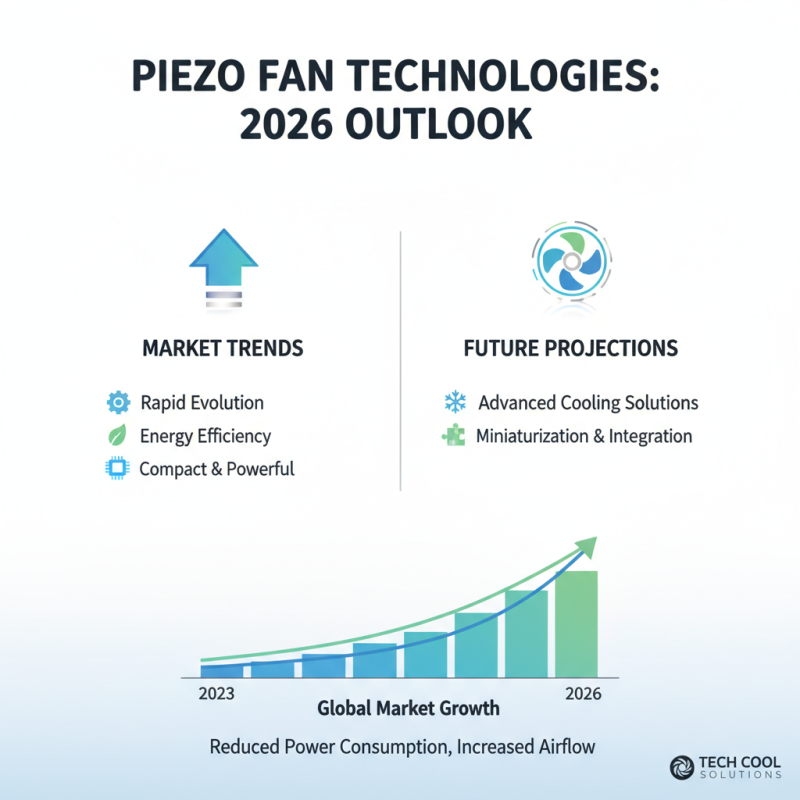
The piezo fan market is evolving rapidly. The technology is becoming more energy-efficient. Therefore, it plays a crucial role in modern cooling solutions. Innovations focus on minimizing power consumption while maximizing airflow. These fans are small but powerful. They fit well into tight spaces, making them ideal for various applications.
Current trends highlight the growing demand for compact cooling devices. Engineers are designing new models with enhanced performance. Future projections indicate a shift towards smart cooling systems. Intelligent controls could optimize fan speeds based on real-time temperatures. This adaptability can lead to significant energy savings, but challenges remain.
Companies might face hurdles in mass production. Scaling new technologies can be difficult. Moreover, there is also a need for user education. People might not be familiar with piezoelectric technology. As awareness grows, demand will likely increase. It’s important to consider these factors when looking at future developments in piezo fan technology.