Why Choose Piezo Fans for Your Cooling Solutions?
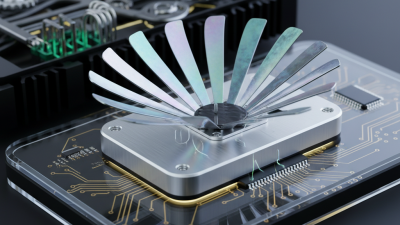
In the quest for optimal cooling solutions, the choice of cooling technology is paramount. Among the various options available, the Piezo Fan stands out due to its unique benefits. These fans utilize piezoelectric technology, which converts electrical energy into mechanical movement. This results in efficient airflow with minimal energy consumption.
Piezo Fans are not just energy savers; they are also compact and lightweight. Their design allows for integration into tight spaces, making them ideal for portable devices. However, some may question their reliability compared to traditional fans. The truth is that, while they offer many advantages, there are scenarios where they might not perform as expected. Users should evaluate their specific needs and consider potential limitations.
Ultimately, selecting the right cooling solution requires careful consideration. Piezo Fans provide a modern alternative that can enhance performance in many applications, but they are not a one-size-fits-all solution. Balancing their innovative features with your requirements will lead to informed decisions in cooling technology.

Advantages of Piezo Fans Over Traditional Cooling Solutions
Choosing piezo fans for cooling solutions comes with distinct advantages over traditional methods. Traditional fans often require significant power and can be less efficient. In contrast, piezo fans use vibrations to generate airflow, resulting in quieter operation and lower energy consumption. According to a recent industry report, piezo fans can reduce energy usage by up to 40% compared to traditional fans.
One notable aspect of piezo fans is their compact size. These fans can fit into smaller spaces and still deliver effective cooling. This is especially valuable in applications where space is limited, such as in electronics and medical devices. A study from an engineering journal indicated that piezo fans maintain temperature regulation more effectively within confined areas.
Tip: When considering cooling solutions, analyze the specific requirements of your application. This will help you choose the best fitting fan type.
Consistency in performance is another benefit. Unlike traditional fans that can wear out or suffer from mechanical failures, piezo fans typically offer a longer lifespan. Their solid-state design reduces points of failure and enhances reliability. However, piezo fans may experience challenges under extreme conditions, which should be evaluated.
Tip: Keep in mind the operating environment when selecting a cooling solution. Extreme temperatures can affect fan performance.
How Piezoelectric Technology Works in Cooling Applications
In cooling applications, piezoelectric technology presents innovative solutions. This method utilizes materials that generate an electric charge when mechanically stressed. When activated, these materials produce precise vibrations, which create airflow. This unique mechanism allows for efficient heat dissipation.
The advantages of piezo fans are numerous. They operate quietly, making them ideal for sensitive environments. These fans consume less energy than traditional cooling methods. Their compact size allows for integration into tight spaces, which enhances design flexibility. However, some challenges remain. The initial cost may be higher, and the technology is still advancing. Users must evaluate whether the benefits outweigh these factors.
Understanding how piezoelectric technology works is crucial for its application. The fans rely on oscillations that can be controlled with precision. This leads to targeted cooling, reducing waste. Still, more research is needed to optimize their performance in various settings. Continuous improvements can enhance effectiveness and reliability in real-world scenarios.
Key Industries Benefiting from Piezo Fan Technology
Piezo fans are transforming cooling solutions across various industries. Their unique technology offers compact, efficient, and silent operation. This has made them particularly appealing in sectors that prioritize space and noise reduction.
In electronics, for example, piezo fans are vital. They manage heat in devices like laptops and servers. Their precision ensures that components maintain optimal temperatures, increasing longevity. In the medical field, they are used in diagnostic equipment. Accuracy in temperature control can be crucial for sensitive instruments. The reliability of piezo fans helps maintain safety standards.
The automotive industry also benefits. Piezo fans assist in managing temperature in electric vehicles. As technology evolves, these fans offer new possibilities for energy efficiency. However, challenges remain in scaling their use and reducing production costs. Exploring these areas could enhance their adoption. Overall, the impact of piezo fan technology in diverse fields is undeniable, yet there is room for improvement.
Comparative Analysis: Piezo Fans vs. Other Cooling Methods
When evaluating cooling methods, piezo fans emerge as a unique option. Unlike traditional fans that rely on rotating blades, piezo fans use vibrations to generate airflow. This mechanism allows for quieter operation and reduced energy consumption. In spaces where noise levels matter, piezo fans offer a significant advantage over conventional methods.
Comparing piezo fans to other cooling solutions reveals distinct contrasts. Traditional fans can be bulky and inefficient, often consuming more power. Their noise can be intrusive, especially in office settings. On the other hand, piezo fans are compact and lightweight. They can fit snugly into tight spaces, a benefit that traditional fans cannot match. However, piezo technology may still struggle with some high-heat applications.
Reliability is another aspect to consider. Piezo fans have fewer moving parts than conventional models. This feature enhances their longevity but might raise concerns about performance under extreme conditions. Users should weigh these factors carefully. The comparison highlights the importance of understanding specific needs when choosing a cooling solution. Each method has its strengths and weaknesses, making effective decision-making crucial.
Why Choose Piezo Fans for Your Cooling Solutions? - Comparative Analysis: Piezo Fans vs. Other Cooling Methods
| Cooling Method |
Efficiency (%) |
Noise Level (dB) |
Lifespan (Years) |
Cost (USD) |
Size (mm) |
| Piezo Fan |
90 |
25 |
10 |
100 |
80 x 80 |
| Axial Fan |
80 |
35 |
6 |
50 |
120 x 120 |
| Radial Fan |
75 |
40 |
8 |
70 |
100 x 100 |
| Peltier Cooler |
85 |
50 |
5 |
200 |
60 x 60 |