How to Utilize Piezo Technology for Your Business Needs?
In today's fast-evolving business landscape, integrating innovative technologies is crucial. Piezo Technology stands out as a game changer. This technology harnesses mechanical stress to produce electrical charge. Its applications range from sensors to actuators, offering unique solutions for various sectors.
Businesses can benefit from Piezo Technology in numerous ways. For instance, it improves efficiency in manufacturing processes. By leveraging this technology, companies can enhance product quality and reduce costs. However, the implementation can pose challenges. Not every business may fully grasp its potential.
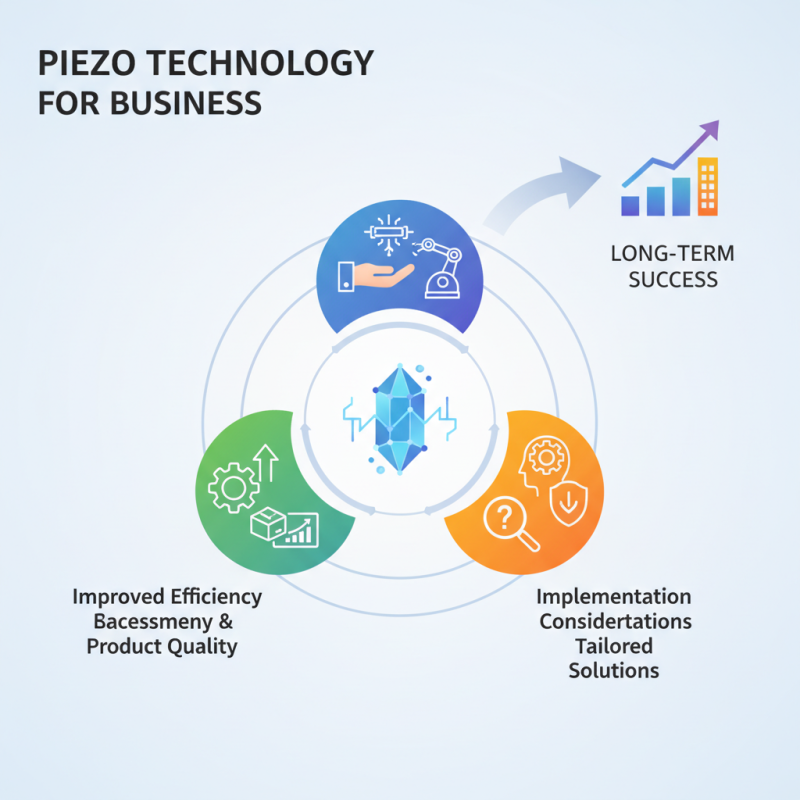
Understanding Piezo Technology requires careful consideration. Training and expertise are essential for successful integration. Companies must assess their specific needs and explore relevant applications. This technology offers promising advantages, but it is not a one-size-fits-all solution. Evaluating its fit for your business is crucial for long-term success.
Understanding Piezo Technology: Principles and Applications
Piezo technology harnesses the unique properties of piezoelectric materials. These materials generate an electrical charge when mechanically stressed. This principle has diverse applications, from sensors to actuators. Businesses can leverage piezo technology in various ways, improving efficiency and innovation.
Implementing piezo technology can be challenging. Companies may struggle to integrate it into current processes. A common mistake is overlooking compatibility with existing systems. Understanding the specific mechanical properties of the piezo materials is crucial. Researching the right applications for your industry can prevent costly errors.
Tips for utilizing piezo technology effectively include testing prototypes before large-scale production. Create small-scale models to evaluate performance. Collaboration with experts can provide valuable insights into optimizing piezo applications. Regularly reassess your strategies to stay aligned with evolving technological advancements.
Learning about piezo technology allows businesses to remain competitive. The journey to effective implementation requires time and effort. Embrace the learning curve to unlock the full potential of this technology.
Identifying Business Needs: Where Piezo Technology Fits In
Piezo technology offers unique solutions for various business needs. It converts mechanical stress into electrical energy. This transformation can enhance efficiency and innovation. An area of implementation is in sensors. Businesses can use piezo sensors to monitor machinery. This helps in predictive maintenance, reducing downtime.
Tips: Understand your business's specific needs. Identify where piezo technology can provide the most benefit. Analyze the processes that require improvement.
Another application is in automation. Piezo devices can enhance precision in manufacturing settings. They can control actuators and improve product quality. However, consider the integration challenges. Implementation may require adjustments to existing systems.
Tips: Be prepared for possible setbacks. Test the technology in small batches first. Gather data and refine your approach. Adaptability is key to successful integration.
Exploring Different Types of Piezo Devices for Various Industries
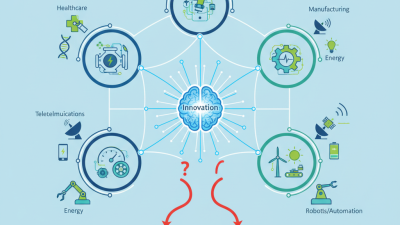
Piezo technology has become essential across various industries. Different types of piezo devices are tailored to meet specific business needs. For instance, piezoelectric sensors are widely used in manufacturing and automation. They convert mechanical stress into electrical signals. This technology enhances precision in operations. A report by MarketsandMarkets forecasts the global piezoelectric device market will reach USD 39.64 billion by 2026. This growth reflects rising demand in sectors like automotive and healthcare.
In the healthcare industry, piezoelectric actuators play a crucial role. These devices are used in ultrasound imaging and drug delivery systems. Their ability to produce fine movements enables more accurate diagnostics. A market report from Allied Market Research suggests the medical application of piezo technology will grow at a CAGR of 8.5% until 2025. This indicates a rising investment in advanced medical devices. However, challenges exist, such as device sensitivity and production costs.
Moreover, in the energy sector, piezoelectric devices are being explored for energy harvesting. They capture vibrations and convert them into usable power. Although still emerging, this technology could significantly impact renewable energy sources. Detailed studies are ongoing to identify the most efficient applications. Developing solutions will require collaboration across industries and academic research. The integration of piezo devices is promising, yet it necessitates further exploration to overcome existing limitations.
Implementing Piezo Solutions: Strategies for Effective Deployment
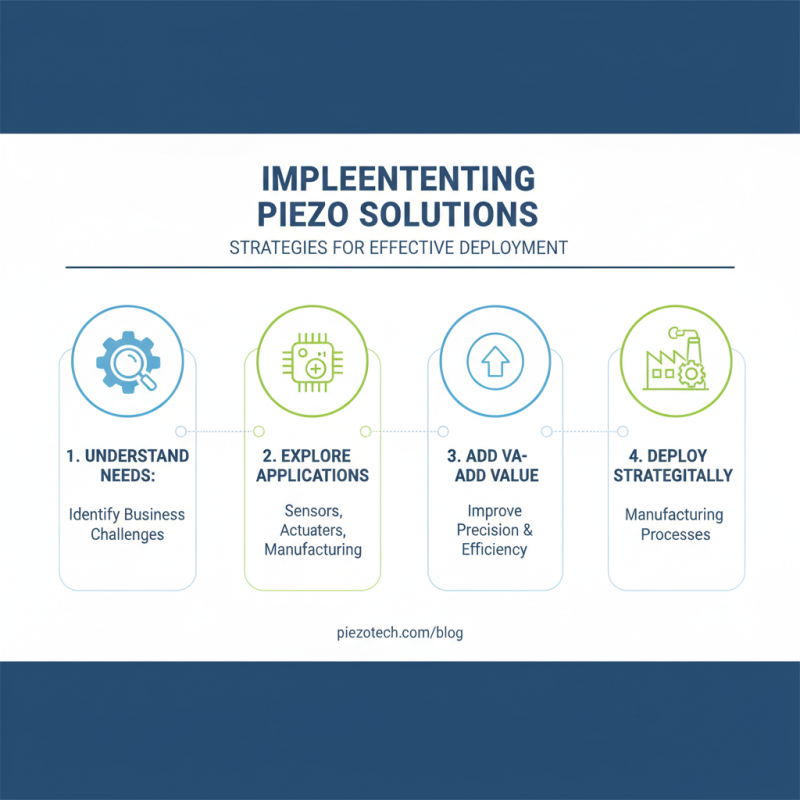
Implementing piezo solutions requires a clear strategy. Understanding the specific needs of your business is crucial. Piezo technology can enhance various applications, from sensors to actuators. Identifying where it can add value is the first step. For example, consider using piezo devices in your manufacturing process. This tech can improve precision and efficiency.
Training your team is essential for effective deployment. Employees should be familiar with piezo systems and their applications. Hands-on workshops can bridge knowledge gaps. You might discover that while initial implementation goes smoothly, ongoing maintenance needs attention. Analyzing performance data regularly is important. Consistent evaluation helps ensure that piezo technology is meeting expectations.
Collaboration with experts can guide your deployment strategy. Sharing experiences with other businesses can unveil insights. It's common to encounter challenges, like integration issues with existing systems. Be prepared for setbacks, as they can lead to valuable lessons. Adaptability in your approach will be crucial for long-term success.
Measuring ROI: Evaluating the Impact of Piezo Technology on Business Performance
Measuring the return on investment (ROI) of piezo technology can be complex. For businesses, understanding its impact on performance is crucial. Piezo technology can improve product designs and enhance manufacturing processes. For example, sensors can provide real-time data on machine health, allowing for predictive maintenance. This leads to reduced downtime and increased productivity.
However, quantifying these benefits can be tricky. Businesses may struggle to capture data accurately. Fluctuations in performance metrics can cloud the real impact of piezo applications. Establishing clear benchmarks is essential. Using controlled environments for testing can yield more reliable results.
Moreover, not all applications of piezo technology guarantee immediate results. It’s essential to iterate and refine processes based on feedback. Companies should continuously assess how each use case influences overall performance. Over time, this reflective approach helps illuminate the true value of piezo technology for business growth.