Top 10 Pzt Material Benefits You Should Know?
PZT materials, or Lead Zirconate Titanate materials, are crucial in various advanced technology applications. According to a report by MarketsandMarkets, the global piezoelectric materials market is projected to reach USD 1.9 billion by 2025, driven largely by PZT materials. These materials stand out due to their remarkable properties, making them suitable for actuators, sensors, and transducers across industries.
Many engineers and researchers emphasize the versatility of PZT materials. They offer high piezoelectric coupling coefficients, which enhance device performance. In addition, PZT materials exhibit strong mechanical properties and excellent thermal stability, essential for demanding applications. However, the environmental impact of lead used in PZT cannot be overlooked. Ongoing research into lead-free alternatives highlights the industry's commitment to sustainability.
Despite these benefits, challenges remain. The production process of PZT materials can be complex. Variations in composition may affect performance reliability. It is crucial for manufacturers to adhere to strict quality control measures to ensure consistent outcomes. Through addressing these challenges, the potential of PZT materials can be fully realized in the future.
Overview of PZT Materials and Their Applications
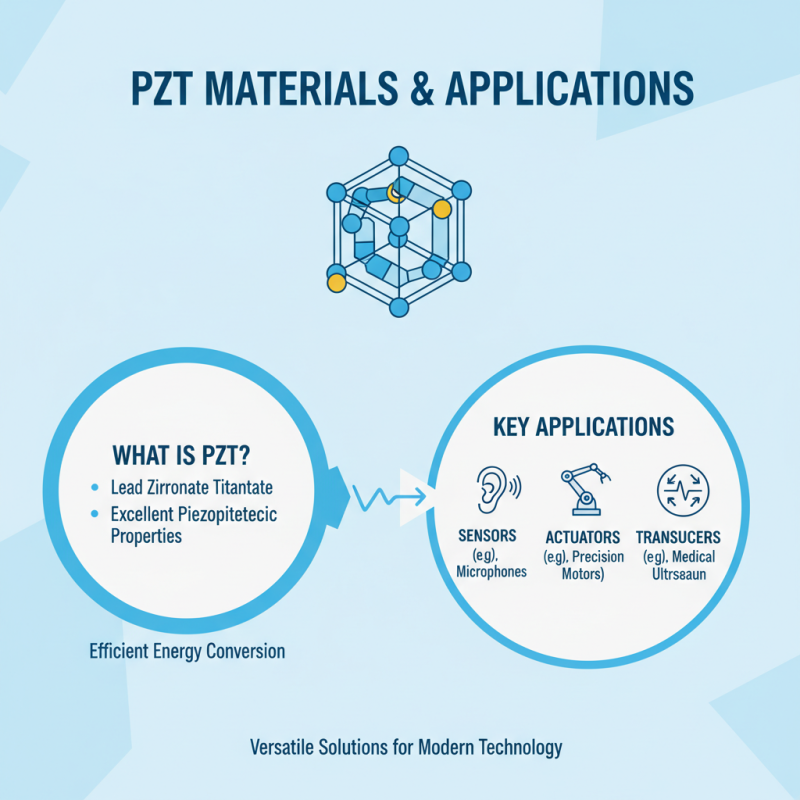
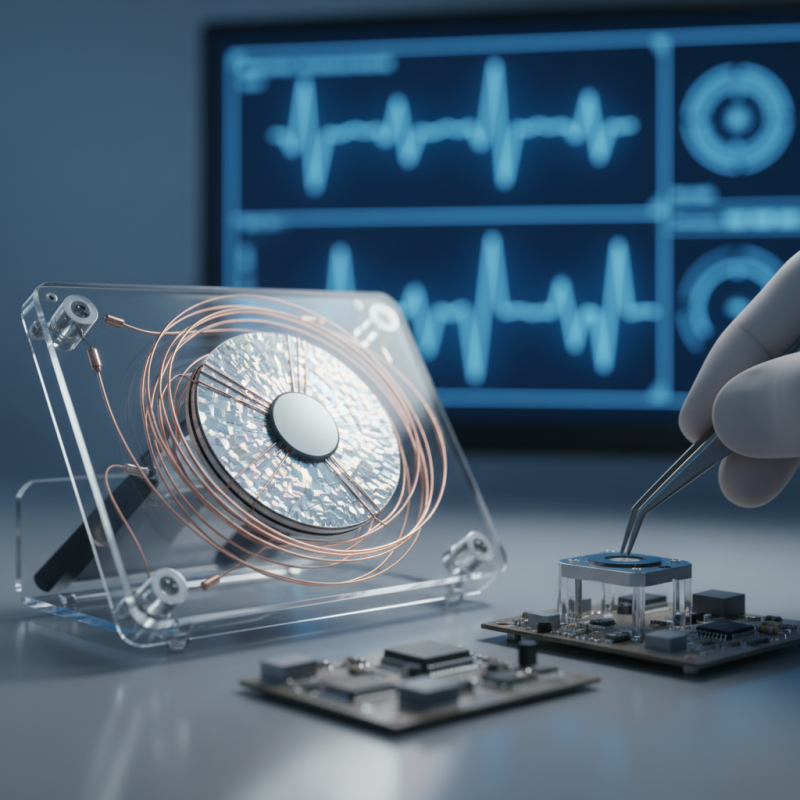
PZT (Lead Zirconate Titanate) materials play a crucial role in various applications. They are widely recognized for their excellent piezoelectric properties. PZT is often used in sensors, actuators, and transducers. The versatility of these materials allows for efficient energy conversion.
In aerospace, PZT materials are essential for advanced systems. They can enhance the performance of aircraft by optimizing engine efficiency. Reports indicate that using PZT in these applications can lead to a performance increase of about 20%. Similarly, automotive industries utilize PZT for vibration control and noise reduction. This can improve the driving experience for consumers.
Despite their advantages, there are still challenges to address. The environmental impact of PZT materials is an ongoing concern. New methods are needed to minimize waste during production. Research is exploring alternatives to improve sustainability. Adopting these materials requires a balance between performance and environmental responsibility. The industry is still learning how to maximize their benefits while addressing these drawbacks.
Key Properties of PZT Materials That Enhance Performance
PZT (Lead Zirconate Titanate) materials stand out due to their exceptional piezoelectric properties. These materials possess a unique ability to convert mechanical energy into electrical energy, making them crucial in sensors and actuators. According to a report by the International Journal of Engineering Research and Applications, PZT exhibits a high electromechanical coupling coefficient, often exceeding 0.9. This translates into more efficient energy conversion compared to other materials.
Another key benefit of PZT is its temperature stability. Data from the IEEE Transactions on Ultrasonics, Ferroelectrics, and Frequency Control indicate that PZT maintains its performance over a range of temperatures. This stability is vital for industrial applications, where environmental conditions can vary significantly. PZT's robustness under stress also enhances durability. However, there are concerns about the long-term reliability of these materials under extreme conditions, requiring careful consideration in design.
PZT materials are also versatile and customizable. Their compositions can be modified to tailor specific properties, such as dielectric strength and mechanical toughness. Reports suggest that adjusting the ratios of lead, zirconium, and titanium can optimize their performance for targeted applications. While this flexibility is advantageous, it often necessitates extensive testing to determine the ideal formulations for different operating environments.
Cost-Effectiveness of PZT Materials in Various Industries
PZT materials, or lead zirconate titanate, are increasingly recognized for their cost-effectiveness across several industries. Their piezoelectric properties make them ideal for sensors and actuators, impacting sectors like healthcare and automotive. A recent report by MarketsandMarkets indicates that the global PZT market is expected to reach $1.5 billion by 2025, showing a robust annual growth.
In healthcare, PZT materials are used in ultrasound machines. These devices rely on precise piezoelectric components. They improve imaging quality while reducing operational costs. The technology's durability and efficiency help hospitals save significantly on equipment expenses. Similarly, in the automotive industry, PZT materials contribute to smart sensors that monitor vehicle performance. Advanced driver-assistance systems become more reliable with these sensors, which enhances safety.
However, challenges remain. The extraction and processing of lead for PZT raise environmental concerns. Not all manufacturers adhere to sustainable practices, which can lead to higher long-term costs related to compliance and remediation efforts. There is still much room for improvement in balancing cost-effectiveness and environmental responsibility in this crucial material's production. Recognizing these complexities is essential for informed decision-making in PZT applications.
Top 10 Benefits of PZT Materials in Various Industries
The chart above illustrates the top 10 benefits of PZT materials across various industries, showcasing their cost-effectiveness and other valuable properties. Each benefit is rated on a scale from 1 to 10, with higher scores indicating greater advantages in practical applications.
Environmental Impact and Sustainability of PZT Materials
PZT (Lead Zirconate Titanate) materials are recognized for their unique properties. They are widely used in various applications, from sensors to actuators. However, the environmental impact and sustainability of these materials are essential considerations.
PZT contains lead, raising concerns about its bioaccumulation and toxicity. While the material exhibits excellent performance, alternatives exist. Researchers are exploring lead-free piezoelectric materials. This could enhance sustainability without compromising efficiency. Stronger regulations may also promote less harmful materials in future developments.
Tip: Investigate eco-friendly options when considering PZT alternatives. Overall, understanding the environmental impact of your choices is crucial.
Furthermore, the manufacturing process of PZT can lead to environmental challenges. Managing waste and emissions is vital for sustainable production. Companies must invest in cleaner technologies. Innovation should focus on reducing harmful byproducts during production.
Tip: Encourage industries to adopt greener practices. Simple steps can make a significant difference.
In conclusion, balancing PZT's benefits with its environmental footprint is necessary for a sustainable future. The pursuit of eco-friendly solutions is crucial for the longevity of our planet. Consider the full lifecycle of materials before making decisions.
Innovations in PZT Materials for Future Technologies
As the demand for advanced technologies grows, innovations in PZT materials are emerging. These materials, known for their piezoelectric properties, have expanded applications. They now cater to medical devices, actuators, and energy harvesting systems. The versatility of PZT allows it to meet specific needs across various sectors.
Recent research showcases improvements in PZT formulations. New manufacturing techniques enable finer control over material properties. This results in enhanced performance for sensors and transducers. Such advancements make PZT materials more reliable and efficient in energy conversion applications. However, challenges remain in balancing cost and performance for widespread use.
Despite the benefits, issues surrounding environmental impact must be addressed. The production processes of PZT can produce waste that requires careful management. Future innovations should not only focus on performance but also on sustainability. Developing eco-friendly alternatives will shape the future of PZT applications in technology.