How to Utilize Piezo Technology for Innovations in Various Industries?
Piezo Technology has emerged as a groundbreaking approach across various industries. Dr. Emily Chen, a leading expert in piezoelectric applications, noted, "Innovations in Piezo Technology can redefine product performance and efficiency." This statement captures the essence of how this technology can transform traditional practices.
In sectors from healthcare to automotive, Piezo Technology showcases versatility. For instance, it can enhance medical devices, enabling precise diagnostic tools. In automotive, piezoelectric sensors improve fuel efficiency. These examples illustrate significant changes brought by innovations.
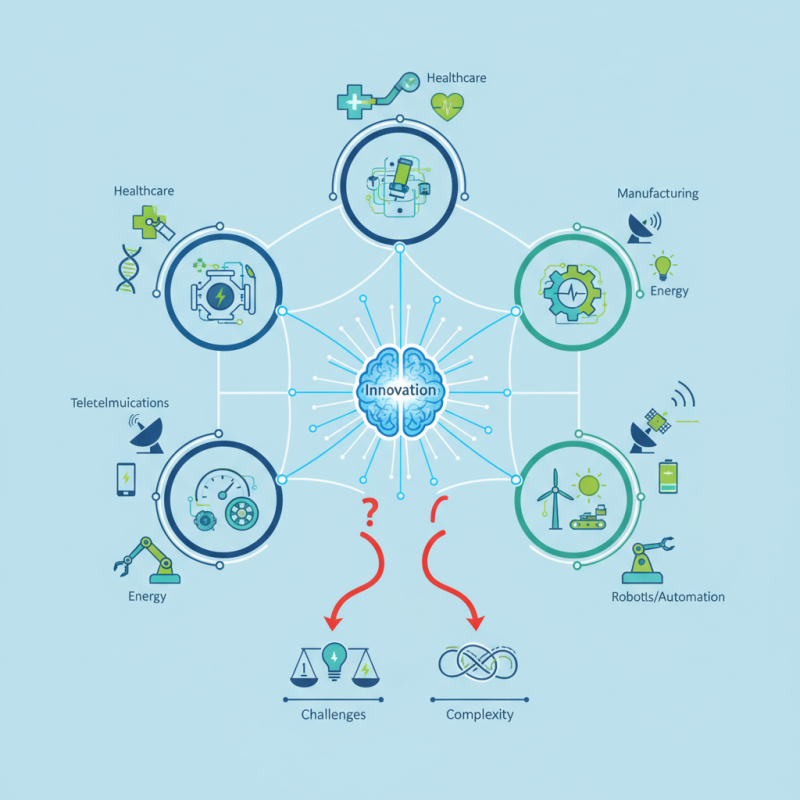
Despite its potential, the journey of integrating Piezo Technology is not without challenges. Understanding applications can be complex. Moreover, some implementations require reevaluation of existing processes. The balance of innovation and practicality is vital for sustainable growth.
Utilizing Piezo Technology in Healthcare: Applications and Innovations
Piezo technology is transforming healthcare in significant ways. This innovation utilizes piezoelectric materials to convert mechanical stress into electrical signals. Such conversion enables advanced medical devices, enhancing patient care and operational efficiency. According to a recent report by MarketsandMarkets, the global piezoelectric devices market is projected to reach $36.71 billion by 2025. This remarkable growth highlights the increasing importance of piezo technology in healthcare applications.
Surgical tools now integrate piezo technology to improve precision. These tools reduce vibrations and provide finer control, crucial for delicate surgeries. Furthermore, piezoelectric sensors monitor vital signs with high accuracy, allowing for real-time health assessments. However, challenges remain in integrating these technologies into existing systems. Healthcare providers need training for effective implementation, which can delay adoption.
Tip: Regular training on new technologies is essential. This ensures healthcare professionals maximize the benefits of innovations.
The demand for wearable health devices is also on the rise. Piezo technology enables smaller, lighter designs, enhancing user comfort. Yet, the durability of these devices can be a concern. Manufacturers must focus on creating robust designs that withstand daily use. Innovation in piezo materials can significantly impact device longevity and performance.
Tip: Always consider user feedback when developing new healthcare technologies. It helps in fine-tuning functionality and satisfaction.
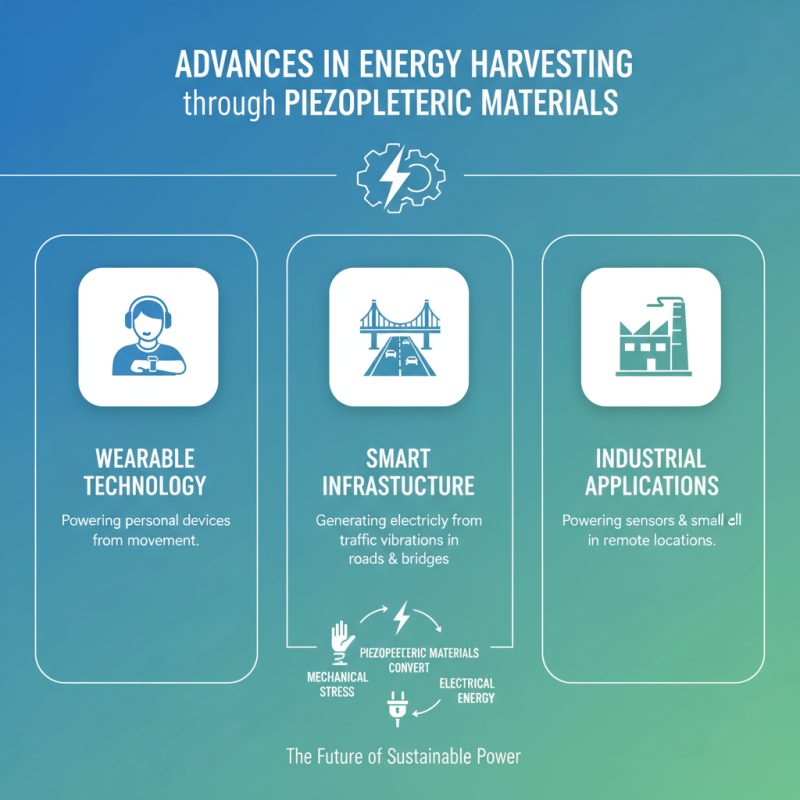
Advancements in Energy Harvesting through Piezoelectric Materials
Piezoelectric materials are revolutionizing how we think about energy harvesting. These materials convert mechanical stress into electrical energy, creating opportunities across various industries. From wearable technology to smart infrastructure, the potential is vast. Innovations are emerging that harness this energy in everyday applications. For instance, sensors in bridges and roads can generate power from traffic vibrations.
Tips: Explore partnerships with materials science experts. Collaborating can enhance your understanding of piezoelectric technology. Test various materials to improve efficiency and reliability in your applications.
In healthcare, piezo technology can be life-changing. Medical devices, such as pacemakers, can be powered by body movements. This innovation reduces dependency on batteries, promoting longevity in device life. However, challenges remain. The durability of piezo materials under continuous stress needs further investigation.
Tips: Conduct field tests to identify performance limits. Gather feedback from users to iterate on your designs. Ensure that your solutions address real-life challenges effectively.
Piezo Technology in Consumer Electronics: Enhancing User Experience
Piezo technology is revolutionizing consumer electronics by enhancing user interaction. The technology can convert mechanical stress into electrical signals. This process opens up new avenues for creating responsive devices. Imagine a smartphone that vibrates differently based on notifications. It could offer a subtle way to alert users.
Various applications show the promise of piezo technology. For instance, it can enable touchless interfaces. Users might appreciate controlling devices with gestures. This enhances convenience while reducing wear on physical buttons. However, the challenge remains in achieving reliable performance across different environments.
Implementing piezo technology may require careful consideration of materials. The right choice is crucial for balancing sensitivity and durability. While prototypes are promising, some designs may not meet expectations. Ongoing testing and feedback loops are essential for refinement. The journey to perfecting these innovations can be complex, yet the potential rewards are significant.
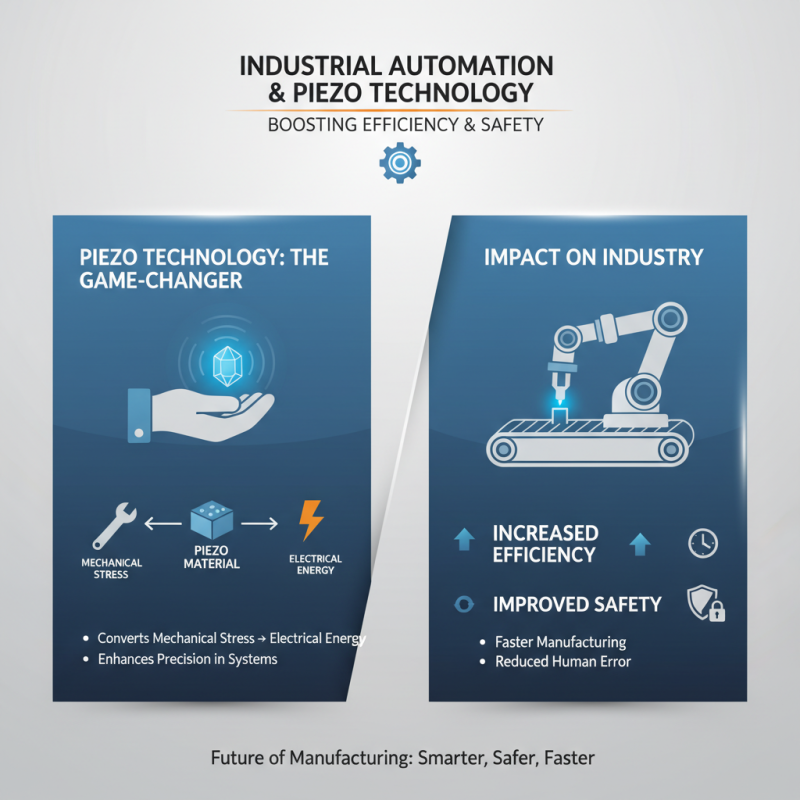
Industrial Automation and Piezo Technology: Boosting Efficiency and Safety
Industrial automation has rapidly evolved, with piezo technology emerging as a game-changer. This technology uses piezoelectric materials to convert mechanical stress into electrical energy. Such functionality enhances precision in automated systems. It pushes current limits in manufacturing and assembly processes, making them more efficient.
Efficiency is crucial in modern industries. Piezo technology enables quick responses to command signals. This means systems can adapt to changes in real-time. Imagine a production line that adjusts speed and power without human intervention. This reduces waste and enhances productivity. However, reliance on technology can lead to over-dependence. What happens if systems fail?
Safety also improves with piezo systems. These devices can provide feedback on operational conditions, alerting workers of potential issues. Continuous monitoring ensures a safer environment. Yet, getting accustomed to such innovations poses challenges for personnel. Comprehensive training is essential. Understanding the technology means fewer accidents. Balancing innovation with human capability is key. In pursuing automation, industries must reflect on the implications of piezo technology.
The Future of Piezoelectric Sensors in Smart Infrastructure Development
The integration of piezoelectric sensors in smart infrastructure is poised to reshape urban landscapes. Research indicates that the global piezoelectric sensor market is expected to reach $3.75 billion by 2025, driven by advancements in smart city technologies. Piezo sensors can convert mechanical energy into electrical energy, enabling real-time monitoring of structural integrity in bridges and buildings. This technology offers an innovative solution to enhance infrastructure safety and efficiency.
Moreover, the implementation of these sensors can yield significant cost savings. For instance, a study showed that proactive maintenance using piezoelectric data can reduce repair costs by up to 20%. However, challenges remain. The accuracy and reliability of piezo sensors depend on installation conditions. Environmental factors can affect sensor performance. This raises concerns about data integrity in critical applications.
Infrastructure developers must prioritize the calibration of these sensors to ensure data accuracy. Regular maintenance schedules need to be established to address potential sensor drift over time. As cities adopt more piezoelectric technologies, a comprehensive framework for data management will be essential. Adapting to these challenges while leveraging technological advancements is crucial for the success of smart infrastructure development.
Applications of Piezo Technology Across Various Industries