Leave Your Message



Choosing the right Piezo Fan begins with the application, not the catalogue photograph. A compact ceramic actuator may look identical across suppliers, yet airflow, noise, voltage, and service life can differ sharply. For global sourcing teams, these differences affect thermal performance, compliance, shipping risk, and total cost.
The need for efficient cooling is expanding. The International Energy Agency’s Energy and AI report estimates that data centres consumed about 415 TWh of electricity in 2024. It expects demand to more than double by 2030. This pressure makes low-power airflow technologies increasingly relevant in servers, medical equipment, telecom devices, and industrial electronics. MarketsandMarkets’ Piezoelectric Devices Market report also identifies electronics, healthcare, and automotive systems as important growth areas for piezoelectric technology. These reports do not guarantee that every Piezo Fan project will succeed. The application still decides the result.
A reliable evaluation should compare measured airflow at the real operating pressure. Ask suppliers for acoustic data, input-current curves, thermal test conditions, and accelerated-life results. Check whether samples were tested at 12 volts, 24 volts, or another actual system voltage. Confirm material traceability, quality controls, export documentation, and applicable safety requirements before approving production. Details matter. A fan that cools well in an open laboratory may underperform inside a dusty enclosure. That assumption is too neat. Procurement teams should also review supplier capacity, tooling ownership, inspection methods, and backup plans. This guide explains how to balance performance, reliability, certification, and supply continuity when selecting a Piezo Fan for global sourcing.
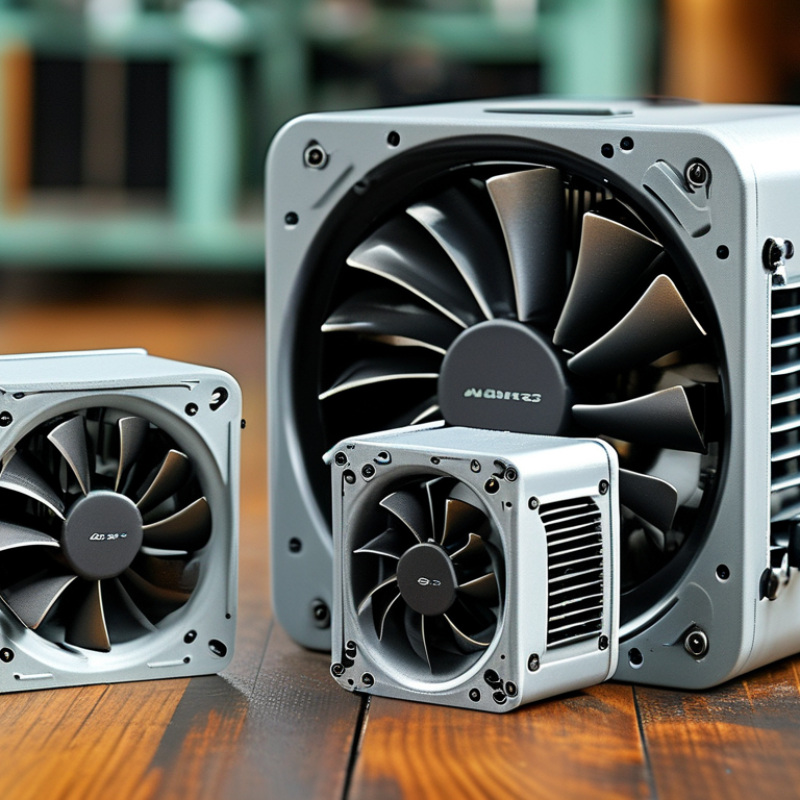
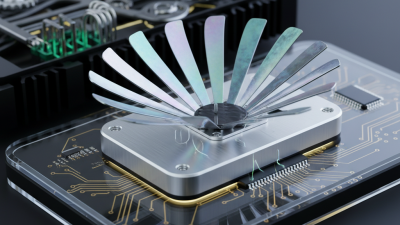
A piezo fan moves air through a vibrating metal shim, not a spinning blade. An alternating voltage bends the piezoelectric ceramic element at ultrasonic frequency. The attached fin transfers this motion to nearby air. Repeated boundary-layer disruption creates a cooling flow across a heat source. In practice, I check the airflow path with a simple smoke test. It reveals dead zones behind ribs or inside narrow enclosures. Quiet operation is a strength. It is not silent.
Key terms need careful separation. Airflow describes the volume moved, often in L/min or CFM. Static pressure shows how well the fan works against resistance. Resonant frequency identifies the strongest vibration range. Drive voltage and input power affect motion, heat, and service life. Acoustic noise is usually measured in dB(A), but test distance matters. A fan rated at zero pressure may perform poorly behind a dense filter. That detail matters.
For global sourcing, request test conditions, tolerance ranges, and sample data. Confirm voltage compatibility, frequency control, mounting direction, connector design, and operating temperature. Ask for lifetime testing under continuous operation. I have seen promising samples lose airflow after installation because the housing changed the resonance. Datasheets can also hide measurement limits. Measure it carefully. Compare several units in the real enclosure, not only on an open bench. Consider dust, vibration, humidity, and production variation before approving a supplier.
| Category | Parameter or Term | Definition | Typical Generic Data | Sourcing and Evaluation Guidance |
|---|---|---|---|---|
| Operating Principle | ||||
| Technology | Piezoelectric actuation | A piezoelectric ceramic changes shape when an alternating electrical voltage is applied. This movement drives a thin metal or polymer blade to generate air motion. | No conventional motor, rotor, or bearing is required. | Confirm the supplier's actuator construction, blade material, and assembly method because these directly affect durability and airflow consistency. |
| Air movement | Boundary-layer effect | The oscillating blade transfers momentum to nearby air, creating a directional airflow along the blade surface and through the outlet area. | Airflow is generally localized and directional rather than comparable to a large centrifugal or axial fan. | Test the fan in the actual enclosure. Airflow can change substantially with outlet geometry, nearby walls, filters, and obstructions. |
| Drive method | AC resonance drive | The driver applies an alternating voltage near the mechanical resonant frequency of the piezoelectric blade assembly. | Operating frequency is commonly in the low-kilohertz range, often approximately 2–5 kHz depending on design. | Request the specified drive waveform, frequency tolerance, startup behavior, and driver compatibility. Do not assume that a generic oscillator will provide the rated output. |
| Mechanical system | Resonant blade assembly | The piezoelectric element and flexible blade are tuned to work together at a designed resonant frequency. | Small frequency changes can affect displacement, airflow, power consumption, and acoustic output. | Ask for frequency-versus-airflow test data and the acceptable operating-frequency window at the intended temperature range. |
| Electrical and Mechanical Specifications | ||||
| Electrical input | Rated input voltage | The voltage specified for the piezoelectric driver or fan assembly under normal operating conditions. | Many compact designs use a low-voltage DC supply for the driver, commonly 5–24 VDC; the piezoelectric element itself is driven by an internally generated AC signal. | Verify nominal voltage, allowable tolerance, polarity protection, startup current, and whether the driver is included in the quoted assembly. |
| Electrical input | Power consumption | The electrical power used by the complete fan assembly, normally including the driver when supplied as a finished product. | Compact units are often approximately 0.2–3 W, depending on size, airflow target, and drive conditions. | Compare power at the same airflow and test pressure. A lower wattage figure alone does not prove better efficiency. |
| Electrical input | Operating current | The input current drawn from the specified DC supply during stable operation. | At 12 VDC, a 0.2–3 W unit would typically draw about 17–250 mA, excluding unusual startup conditions. | Use the maximum specified current when sizing the power supply, wiring, connector, and protection device. |
| Mechanical dimensions | Overall size and thickness | The external envelope required for installation, including the frame, blade, driver, and cable clearance. | Compact products may range from roughly 30–100 mm in length or width and about 3–15 mm in assembly thickness. | Request a dimensioned drawing with mounting-hole locations, airflow direction, cable exit, keep-out zones, and tolerances. |
| Mechanical construction | Moving mass and bearing system | Piezo fans use a flexing blade rather than a rotating impeller, so they normally have no rotary bearing or commutator. | Very low moving mass; no conventional bearing lubrication requirement. | This can support long service life, but blade fatigue, adhesive failure, contamination, and driver damage still require validation. |
| Airflow and Thermal Performance | ||||
| Air performance | Free-airflow rate | The volume of air moved when the fan operates with minimal external resistance. | Small piezo fans commonly deliver approximately 0.1–2.0 CFM, or about 0.17–3.4 m³/h, depending on design and test method. | Free-airflow values are not interchangeable across suppliers. Require the test orientation, measurement distance, voltage, frequency, and instrumentation details. |
| Air performance | Static pressure | The pressure difference the fan can generate against airflow resistance. | Typical compact values are often in the range of a few to several tens of pascals, depending on the design. | For ducts, heat sinks, filters, or narrow vents, select from an airflow-versus-pressure curve rather than from free-airflow alone. |
| Air performance | Airflow direction | The direction in which the oscillating blade produces its strongest cooling flow. | Usually one primary directional flow path; reverse-flow performance may not be equivalent. | Confirm the marked inlet and outlet sides, required clearance, and whether the product is suitable for push, pull, or cross-flow installation. |
| Thermal cooling | Thermal resistance improvement | The reduction in thermal resistance or component temperature achieved by adding directed airflow. | No universal value; results depend on heat-source power, heat-sink design, airflow path, ambient temperature, and mounting. | Require an application-level thermal test using the actual heat source and enclosure instead of relying only on a catalog airflow figure. |
| Operating environment | Ambient temperature and humidity | The environmental range in which the fan is specified to operate reliably. | Generic compact assemblies are often specified around 0–60 °C or −10–70 °C, but the actual range is product-specific. | Request operating and storage limits, condensation restrictions, altitude assumptions, and performance derating at temperature extremes. |
| Acoustic, Reliability, and Compliance Terms | ||||
| Acoustics | Sound pressure level | The measured acoustic level produced by the fan at a defined distance, frequency, voltage, and environment. | Compact piezo fans are often specified around 20–40 dB(A), but tonal components near the drive frequency may still be noticeable. | Check the measurement distance, background-noise correction, weighting method, mounting condition, and whether the driver noise is included. |
| Acoustics | Operating frequency and tonal noise | The electrical and mechanical operating frequency can create a distinct tonal sound even when the A-weighted level is low. | Common operating frequencies are typically several kilohertz, with harmonics influenced by blade shape and mounting. | Conduct a listening test in the final enclosure and request narrow-band acoustic data for noise-sensitive products. |
| Reliability | Service life | The expected operating duration before performance falls outside the agreed limits under defined conditions. | Life claims may range from approximately 20,000 to 50,000 hours, but the value depends on temperature, drive amplitude, contamination, and test criteria. | Ask for the failure definition, test temperature, duty cycle, sample size, confidence level, and accelerated-life method. Avoid comparing hours without these conditions. |
| Reliability | Blade fatigue resistance | The ability of the flexible blade and its joint to withstand repeated oscillation without cracking, permanent deformation, or detachment. | Performance depends on blade alloy or polymer, stress concentration, adhesive or weld quality, and drive control. | Request endurance-test results, visual inspection criteria, and process controls for blade alignment and attachment. |
| Ingress protection | Dust and moisture resistance | The degree to which the fan assembly resists solid particles, water, and humidity intrusion. | Many compact piezo assemblies are not automatically sealed and may have no formal IP rating. | Require a stated IP rating only when supported by testing. For dusty or humid applications, evaluate coating, mesh, sealing, and airflow derating. |
| Compliance | EMC and safety documentation | Evidence that the driver and complete assembly meet applicable electromagnetic compatibility and product-safety requirements. | Documentation may include electrical test reports, material declarations, restricted-substance declarations, and market-specific conformity records. | Define the destination markets before sourcing. Test the complete product, because enclosure wiring and the final power supply can affect EMC results. |
| Global Sourcing and Quality-Control Criteria | ||||
| Customization | Driver compatibility | The ability of the fan to operate with the buyer's power rail, control signal, connector, and switching strategy. | Some products include an integrated oscillator; others require an external driver or defined AC excitation. | Obtain the complete electrical interface specification, recommended circuit, connector drawing, and protection requirements before tooling. |
| Quality control | Critical-to-quality characteristics | Measured characteristics that must remain within limits to ensure fit, function, and reliability. | Typical items include airflow, current, sound level, operating frequency, dimensions, blade alignment, and visual defects. | Agree on inspection methods, sample levels, acceptance limits, calibration requirements, and a golden sample before mass production. |
| Logistics | Packaging and ESD protection | Protection against bending, impact, contamination, electrostatic discharge, and moisture during storage and transportation. | Thin blades and ceramic elements can be vulnerable to mechanical shock and excessive compression. | Approve packaging drawings and transit-test requirements. Confirm moisture-barrier and ESD controls for the driver and piezoelectric element. |
| Commercial evaluation | Total landed cost | The combined cost of the fan, driver, tooling, packaging, testing, freight, duties, quality inspection, and warranty exposure. | Unit price alone does not represent the final sourcing cost. | Compare suppliers using the same specification, annual volume, tooling ownership terms, lead time, Incoterms, documentation package, and warranty conditions. |
| Validation | Application fit test | A test performed in the final product to verify cooling, acoustics, electrical behavior, mechanical fit, and environmental durability. | Recommended before production release; sample size and duration should reflect product risk and expected duty cycle. | Use worst-case voltage, temperature, orientation, enclosure tolerance, contamination, and blocked-airflow conditions where applicable. |
Note: The numerical ranges shown are generic engineering reference values for compact piezo fan assemblies. Final specifications must be confirmed through the supplier's controlled datasheet and application-level testing.