Active Piezo Buzzer Tips for Optimal Performance and Application Insights
In the world of electronics, the Active Piezo Buzzer plays a crucial role in sound signaling and notifications. Engineers and product designers often seek ways to enhance the performance of these devices. According to Dr. Jane Thompson, a leading expert in acoustic engineering, "The quality of sound generated by an Active Piezo Buzzer can significantly affect user experience."
Understanding the nuances of Active Piezo Buzzers can elevate product design beyond basic functionality. For instance, factors like frequency and drive voltage directly influence output sound quality. Many designers overlook these aspects, leading to subpar results. A well-designed Active Piezo Buzzer can provide clear, crisp sounds that enhance product usability.
However, not all applications require the same specifications. It’s essential to match the Active Piezo Buzzer to the application context. Misunderstandings regarding power requirements or ambient conditions can lead to inefficient designs. Continuous learning in this field is vital. Exploring optimization tips can reveal significant insights, ensuring that sound performance meets or exceeds user expectations.
Understanding the Basics of Active Piezo Buzzers and Their Functionality
Active piezo buzzers are essential components in various electronic devices. Their functionality is based on piezoelectric materials that vibrate when an electric current passes through them. This vibration produces sound. Understanding their operational principles is vital for optimal use.
For instance, the sound frequency of active piezo buzzers typically ranges from 2 kHz to 4 kHz. This range is effective for many applications, including alarms and notifications. However, variations in design can affect performance. Parameters such as dimensions and voltage influence sound output, making precise specifications critical.
Tip: Always consider the power supply when selecting a buzzer. Insufficient voltage can lead to suboptimal sound levels. Additionally, operating at the manufacturer’s recommended frequency will maximize efficiency and sound clarity.
Another consideration is the environment where the buzzer will be used. Exposure to moisture or extreme temperatures can degrade performance. According to industry reports, around 30% of failures in electronic components arise from environmental stress. Therefore, choosing a buzzer designed for specific conditions is crucial.
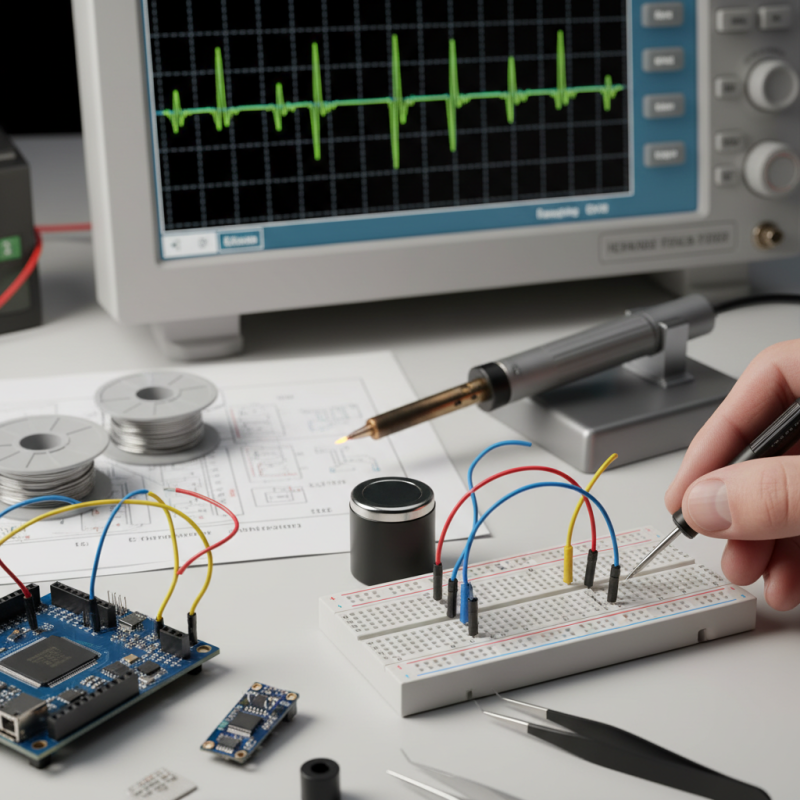
Tip: Conduct regular testing in real-world scenarios to ensure reliability. This practice can identify potential issues early. While active piezo buzzers are generally reliable, reflective analysis is essential for continuous improvement and performance enhancement.
Active Piezo Buzzer Performance Analysis
This bar chart displays key performance metrics for active piezo buzzers, highlighting their frequency response, volume output, power consumption, and durability in operational cycles.
Key Factors Influencing the Performance of Active Piezo Buzzers
When choosing an active piezo buzzer, several key factors can influence its performance. The operating voltage plays a significant role; too high can damage the buzzer, while too low can result in insufficient sound output. The frequency range is another essential aspect. Most buzzers operate optimally within a specific frequency range. Understanding these specifications can help in achieving the desired sound quality.
Installation can also impact performance. A poorly mounted buzzer may not resonate as intended, leading to lower sound intensity. Ensuring proper alignment and secure placement are crucial for optimal functioning. Consider the environment as well. A buzzer placed in a noisy area may not be effective.
Tips for enhancing buzzer performance include using proper power supply circuits. Avoiding voltage spikes helps maintain buzzer longevity. Experimenting with different frequencies can yield unique sound variations. Always refer to datasheets for detailed specifications. This can prevent unnecessary issues during implementation. However, it's essential to keep testing and adjusting for the best results. Remember, practice leads to improvement.
Common Applications and Use Cases for Active Piezo Buzzers
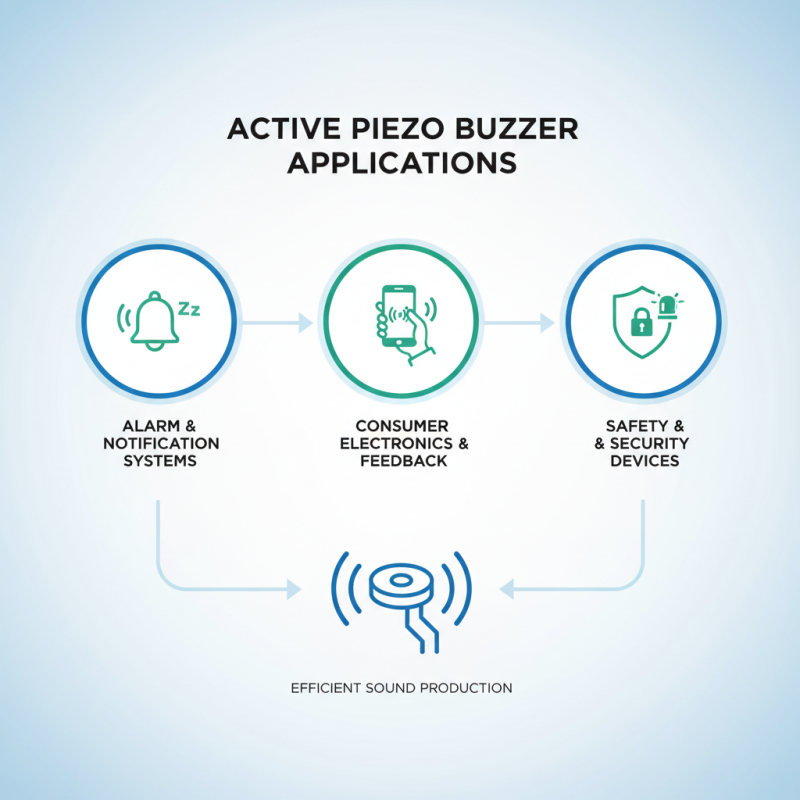
Active piezo buzzers are widely used across various industries due to their efficient sound production. One common application is in consumer electronics. You often find them in alarm systems and notification devices. Their ability to produce sound quickly and at various pitches makes them ideal for alerts. In handheld devices, they provide immediate feedback to users, enhancing user experience.
Another crucial usage area is in automotive applications. Active piezo buzzers serve as warning indicators for various functions. For example, they alert drivers to fasten seatbelts or remind them when the vehicle is in reverse. These sound alerts improve safety and awareness on the road. However, the placement of buzzers is vital. Incorrect positioning can lead to diminished sound quality, reducing effectiveness.
In the medical field, piezo buzzers play a significant role. They provide auditory signals in medical devices, ensuring patient safety. However, designers must consider volume settings carefully. Too loud may cause discomfort, while too soft can be ineffective. Balancing these factors is essential for optimal performance. Understanding the specific context of each application significantly enhances the effectiveness of active piezo buzzers.
Tips for Maximizing the Efficiency of Active Piezo Buzzers
Active piezo buzzers play a crucial role in various electronics, from alarms to notification systems. To maximize their efficiency, it’s vital to focus on proper parameters during design. According to a recent industry report, adjusting frequency settings can increase sound output by up to 30%. Selection of the right encapsulation material also affects sound quality. A well-sealed piezo buzzer can deliver clear tones without distortion.
Understanding the power sources is critical. Many piezo buzzers operate effectively within low-voltage ranges, often between 3V to 12V. This adaptability is valuable in battery-powered applications. However, using inappropriate voltage can lead to reduced lifespan and performance. It's noteworthy that improper connections sometimes lead to intermittent functioning, which can confuse users.
Feedback mechanisms are essential for optimizing usage. Regular testing in real-world conditions can highlight unexpected issues, such as response time delays. Data shows that buzzers placed too close to resonant surfaces may amplify distortion, affecting overall sound clarity. Evaluating installation environments helps mitigate such setbacks. This approach ensures that even minor factors do not impact overall performance.
Troubleshooting Common Issues with Active Piezo Buzzers
Active piezo buzzers are popular in various electronic applications due to their efficiency and versatility. However, users often encounter issues that can hinder performance. Troubleshooting these common problems requires understanding the underlying causes.
One frequent issue is sound distortion, which can result from improper voltage supply. In many cases, operating buzzers outside their specified voltage range leads to peak distortion. Ensure you are using a stable power supply that meets the buzzer's requirements. Additionally, environmental factors like humidity can affect performance. Keeping buzzers in dry environments enhances their longevity and functionality.
Another common problem is low sound output. This can arise from mismatched impedance with the driving circuit. For optimal results, match the buzzer impedance to your circuit configuration. Sometimes, a simple adjustment in placement can improve sound resonance significantly. Avoid positioning buzzers too close to soft surfaces, as they may absorb sound.
Tips for better performance include regularly checking connections and using isolation techniques to prevent interference. A basic acoustic test can determine if a buzzer is functioning properly. When troubleshooting, always start with the simplest problems before moving to complex solutions. This approach can save time and effort. Remember, attentiveness to minor details makes a big difference.