Top Applications of Piezoelectric Ceramic Disc in Modern Technology?
The use of Piezoelectric Ceramic Discs is transforming various modern technologies. As Dr. Emily Carter, a renowned expert in materials science, states, "Piezoelectric materials harness energy effectively and are pivotal for technological advances." These discs convert mechanical stress into electrical energy, enabling a variety of applications.
In healthcare, Piezoelectric Ceramic Discs are utilized in ultrasound devices for imaging purposes. They improve diagnostics by providing clearer images. In consumer electronics, they enhance stereo systems, improving sound quality. This energy-efficient technology merges innovation with sustainability, appealing to eco-conscious consumers.
However, challenges remain in material performance and development costs. As industries demand higher efficiency, researchers face the pressure to innovate. The potential of Piezoelectric Ceramic Discs is immense, yet it requires ongoing exploration and optimization. Balancing performance with affordability remains a key issue for widespread adoption.

Applications of Piezoelectric Ceramic Discs in Industrial Sensors and Actuators
Piezoelectric ceramic discs are essential in industrial sensors and actuators. These materials convert mechanical stress into electrical signals. This property is highly useful for measuring pressure, vibration, and displacement. In factories, sensor systems detect changes in the environment. For instance, in an assembly line, a piezoelectric sensor can monitor machine health in real-time.
Actuators also benefit from piezoelectric ceramics. These devices create motion in response to electric signals. In robotics, they enable precise movements. An actuator may control a robotic arm's position accurately. The response time is remarkably fast, allowing for seamless operations. However, durability can pose a concern. Over time, repeated use may wear out these components.
Imperfect reliability remains a challenge. Environmental factors can affect piezoelectric performance. Temperature fluctuations may alter the sensitivity of sensors. Moreover, mechanical stress must be managed carefully. Designers often need to test and adjust systems for optimal performance. Understanding these issues is critical for refining applications.
Role of Piezoelectric Ceramic Discs in Medical Ultrasound Imaging Technologies
Piezoelectric ceramic discs play a crucial role in
medical ultrasound imaging technologies. These discs convert
electrical energy into mechanical vibrations. They facilitate the generation of ultrasound waves. When
these waves travel through the body, they produce images of
internal structures. The precision of piezoelectric materials enhances image quality significantly.
In ultrasound machines, piezoelectric ceramic discs are fundamental. They help in emitting and receiving
sound waves effectively. Medical professionals rely on these images for accurate diagnoses. However, the
challenge lies in calibrating these ceramics for different
applications. Variability in materials can affect the consistency of the images produced.
Ensuring optimal performance requires ongoing research and adjustment.
Moreover, while piezoelectric ceramics are effective, they are not flawless. Manufacturing defects can
occur, leading to reduced functionality. Sometimes, unexpected behaviors arise in certain
environments. These issues require careful consideration in medical settings. Researchers continue to
explore improvements, aiming for more reliable technology in the future. The potential for better imaging techniques is immense.
Impact of Piezoelectric Components in Consumer Electronics and Smart Devices
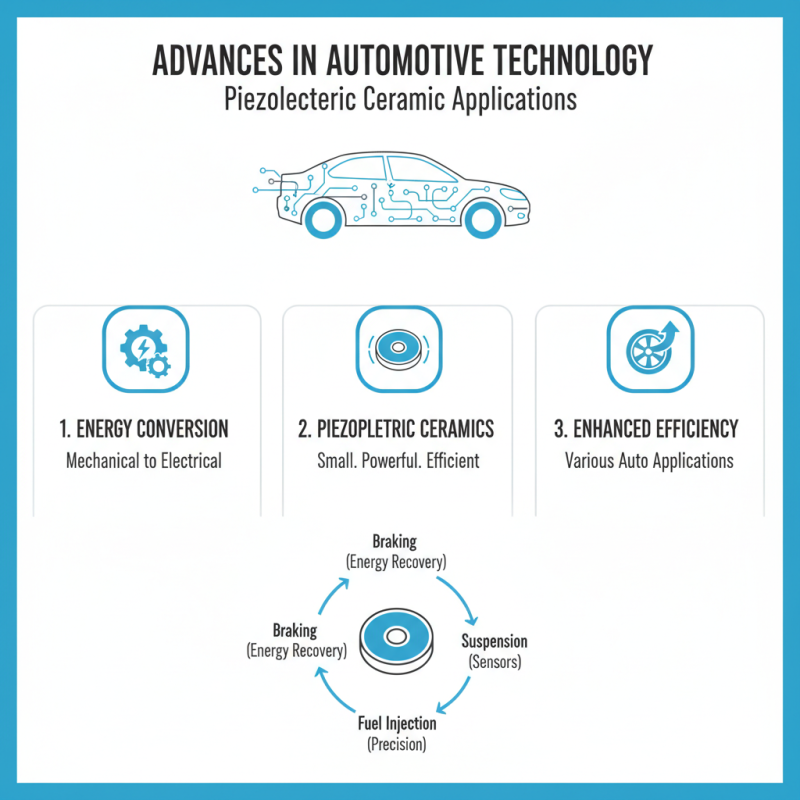
Piezoelectric ceramic discs are transforming consumer electronics and smart devices. Their ability to convert mechanical energy into electrical energy allows for innovative applications. These discs can be found in touch-sensitive materials, wearable devices, and even home automation systems.
In smart devices, piezoelectric components enhance user interaction. For instance, they provide tactile feedback in touchscreen applications. This feedback creates a more engaging experience, letting users feel the response. However, some users find the vibrations too intense or distracting. Balancing feedback and comfort is essential for improving designs.
Moreover, in wearable technology, these components contribute to health monitoring. They enable sensors to capture vital signs effectively. Yet, accuracy issues sometimes arise due to external mechanical noise. Manufacturers must continually refine these devices to avoid false readings. Real progress hinges on resolving these challenges to ensure reliability in everyday use.
Top Applications of Piezoelectric Ceramic Disc in Modern Technology
| Application |
Description |
Impact on Technology |
Market Growth Rate (%) |
| Microphones |
Used in converting sound waves into electrical signals. |
Essential for clear audio in personal tech and communication devices. |
5.2% |
| actuators |
Create motion in devices when subjected to voltage. |
Drive precision movements in robotics and automation. |
8.4% |
| Energy Harvesting |
Converts mechanical energy into electrical energy. |
Supports sustainable power solutions in portable devices. |
10.1% |
| Pressure Sensors |
Measure changes in pressure and convert to electrical signals. |
Vital for environmental monitoring and smart devices. |
7.6% |
| Ultrasonic Devices |
Generate ultrasonic waves for cleaning and imaging. |
Enhanced medical imaging and industrial cleaning processes. |
6.3% |
Utilization of Piezoelectric Discs in Energy Harvesting Solutions for IoT
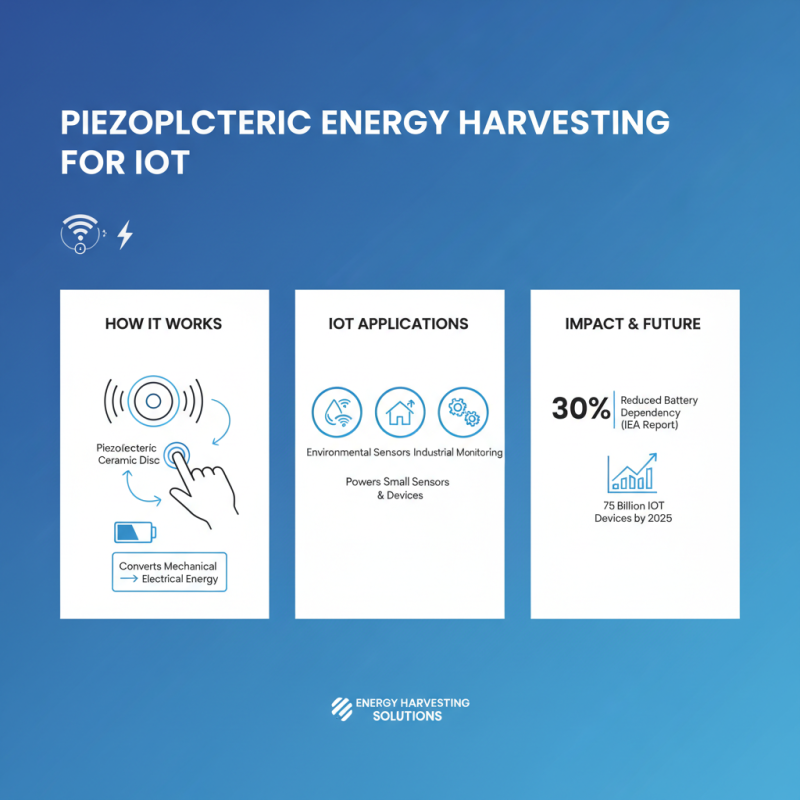
The use of piezoelectric ceramic discs in energy harvesting is gaining traction in the Internet of Things (IoT) sector. These devices convert mechanical energy into electrical energy, making them ideal for powering small sensors and devices. A report from the International Energy Agency indicates that energy harvesting could reduce battery dependency by up to 30% in IoT applications. This shift is crucial as the number of IoT devices is projected to reach 75 billion by 2025.
In practice, piezoelectric discs are integrated into various settings. For example, they can be embedded in flooring to capture energy from foot traffic. Reports show that implementing piezoelectric technology in urban infrastructure could potentially generate enough power to sustain streetlights. However, the energy output is often modest, creating a need for more research into efficiency improvements. Some tests indicate an energy conversion efficiency of only 5%, highlighting room for optimization.
Challenges remain in standardization and scalability. Not all piezoelectric materials perform equally well under different conditions. Additionally, integrating these systems with existing technology can be complex. Addressing these issues will be vital for broader adoption. Each solution requires careful consideration of energy needs and environmental factors. Thus, while the potential is significant, there are hurdles to overcome for widespread use.