In recent years, the use of Piezo Ceramic Discs has dramatically increased in various technological fields. These small, elegant components convert mechanical energy into electrical energy and vice versa. Their applications span from everyday household devices to cutting-edge industrial equipment.
Piezo Ceramic Discs play a crucial role in sensors, actuators, and energy harvesting technology. Their versatility is astounding, making them invaluable in modern devices such as smartphones and medical imaging machines. However, the reliance on these discs raises questions about durability and practical limits.
While the benefits are evident, there is still room for improvement in efficiency and performance. Engineers continue to explore better materials and designs to enhance functionality. As we delve into the top ten uses of Piezo Ceramic Discs, it’s essential to consider both their impressive capabilities and the challenges they present.

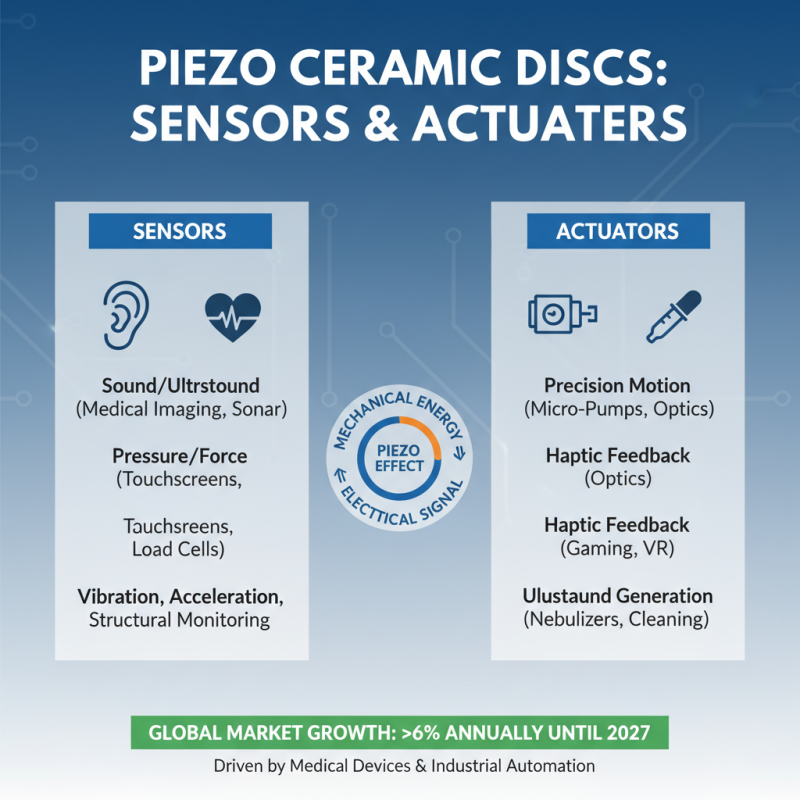
Piezo ceramic discs are integral in modern technology, particularly in the fields of sensors and actuators. Their ability to convert mechanical energy into electrical signals makes them valuable in various applications. In a recent report from the Global Piezoelectric Market, the demand for piezo materials is projected to grow by over 6% annually until 2027. This growth is fueled by innovations in medical devices and industrial automation.
In sensor applications, piezo ceramic discs are widely used in pressure sensors and accelerometers. These sensors improve safety in vehicles and enhance functionality in home appliances. They can detect small vibrations or changes in pressure, making them essential for monitoring systems. For example, they are key components in smart home technology, allowing for precise control of environments.
Tips: When selecting piezo ceramic discs for your project, consider the frequency range. Not all materials perform well under high-frequency conditions. Testing prototypes can reveal potential performance flaws.
Actuators utilizing piezo ceramics are pivotal in robotics and manufacturing. They provide precise movement control, essential in automation. Their compact size allows for integration in limited spaces, making them versatile. However, the rigidity of piezo ceramics can limit their range. Research is ongoing to develop more flexible solutions.
Tips: Always consider thermal stability when using piezo devices. Elevated temperatures can affect their operational efficiency and lifespan.
Piezo ceramic discs are increasingly popular in consumer electronics, specifically for sound and vibration control. These tiny devices convert mechanical energy into electrical energy and vice versa. This functionality plays a crucial role in enhancing audio devices, wearables, and home automation systems. According to industry reports, the global piezoelectric devices market is projected to reach USD 35 billion by 2026, highlighting their growing significance.
In sound applications, piezo discs act as effective speakers. They produce clear audio by vibrating when an electrical signal is applied. This makes them ideal for compact devices where space is limited. Their lightweight design improves portability without sacrificing performance. Wearable technology also benefits from piezo discs. They can accurately monitor vibrations and movements, which enhances fitness tracking capabilities.
**Tip:** Always consider the placement of piezo discs for optimal performance. Misalignment can lead to reduced sound quality.
In terms of vibration control, piezo discs are used in noise-cancellation technology. They actively monitor and neutralize unwanted sounds. This ability is significant for improving user experience in headphones and noise-reducing devices. Reports indicate that effective vibration management can enhance audio fidelity significantly. However, integrating piezo technology can sometimes result in complex design challenges.
**Tip:** Ensure adequate testing of devices using piezo discs, as environmental factors may impact performance.
Piezo ceramic discs play a vital role in medical devices, particularly in ultrasound and imaging techniques. These discs convert electrical energy into mechanical vibrations, enabling high-frequency sound waves to be generated. This technology is crucial for diagnostic imaging, allowing healthcare professionals to visualize internal organs with clarity. The precision offered by piezo ceramics enhances the resolution of ultrasound images, aiding in early disease detection.
In addition to imaging, piezo ceramic discs enable therapeutic ultrasound applications. They can focus energy on specific tissues, promoting healing and pain relief. However, as with any technology, challenges exist. For instance, the efficiency of energy transfer can vary based on the materials used and the design of the device. This inconsistency may affect the quality of the output, raising important considerations for engineers and manufacturers.
Ongoing research is essential to improve these devices. Exploring alternative materials and refining designs could lead to significant advancements. While piezo ceramic technology holds immense promise, developers must remain vigilant about potential limitations. The balance between innovation and practicality will shape the future of ultrasound and imaging technologies, ultimately enhancing patient care in the medical field.
| Application | Description | Key Benefits | Example Technologies |
|---|---|---|---|
| Ultrasound Imaging | Used to generate sound waves for medical imaging. | Non-invasive, real-time imaging. | Diagnostic Ultrasound Systems |
| Therapeutic Ultrasound | Delivers targeted ultrasound energy for treatment. | Precision targeting, minimal side effects. | Physiotherapy Devices |
| Piezocrystals in Sensors | Converts physical stress into electrical signals. | High sensitivity, reliable data. | Pressure and Force Sensors |
| Micro-actuators | Used in precise movement applications. | Compact size, high efficiency. | Optical Scanners |
| Piezoelectric Generators | Harvests energy from mechanical vibrations. | Sustainable energy source. | Wearable Devices |
| Sound Generators | Creates sound waves for signaling or alerts. | Clear audio output, low power consumption. | Alarm Systems |
| Medical Pumps | Facilitates the movement of fluids in medical devices. | High accuracy in fluid delivery. | Infusion Pumps |
| Temperature Sensors | Measures temperature by electrical resistance change. | High accuracy, fast response time. | Medical Thermometers |
| Actuators for Robotics | Provides motion in robotic systems. | High precision and compactness. | Surgical Robots |
| Fluid Control Valves | Manages fluid flow in devices. | Seamless integration, high reliability. | Dialysis Machines |
In modern industrial automation, piezo ceramic discs play a crucial role in precision control and measurement. These discs convert electrical signals into mechanical vibrations, which is vital for various applications. For instance, they are often used in ultrasonic sensors that measure distance with high accuracy. This leads to improved efficiency in production lines, where precise measurements can reduce waste.
Another significant use is in piezoelectric actuators. These small devices enable fine movements in robotics and CNC machines. The ability to control movements down to the micron level is transformative. However, reliance on these technologies does not come without challenges. Factors like temperature variations can affect their performance. This can lead to discrepancies in measurements, demanding regular calibration and maintenance.
Moreover, integrating piezo ceramic discs into existing systems often requires specialized knowledge. Engineers must consider the unique properties of these materials when designing systems. Mistakes in implementation can lead to costly downtime. As industries continue to adopt this technology, understanding its limitations becomes essential for achieving optimal results.
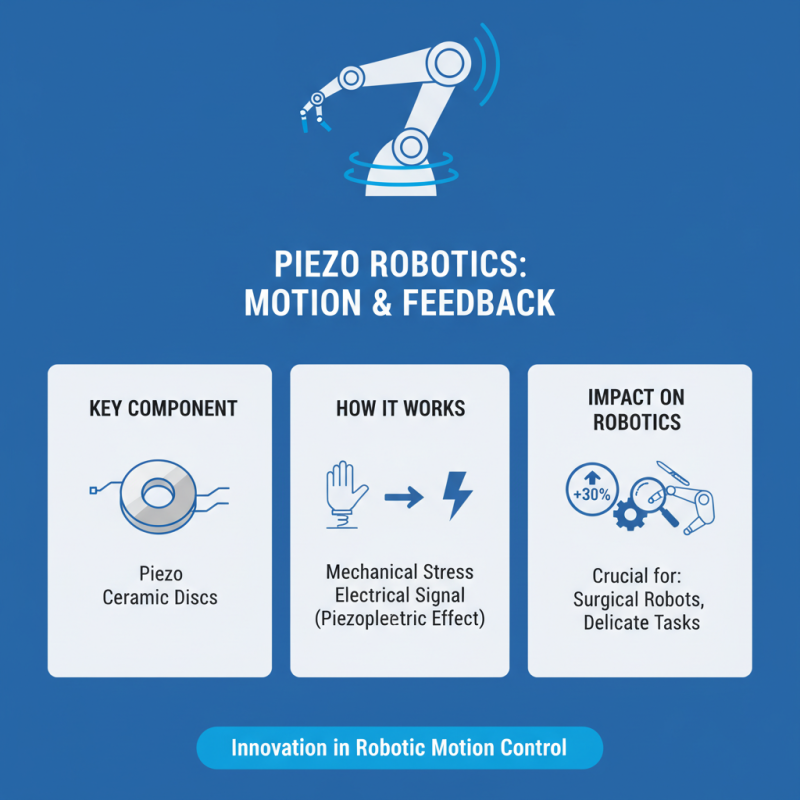
In modern robotics, piezo ceramic discs are essential for enhancing motion and feedback systems. These discs exploit the piezoelectric effect, converting mechanical stress into electrical signals. Detailed studies indicate that integrating these discs improves precision in robotic applications by up to 30%. This level of accuracy is crucial for tasks such as surgical robots, where even slight deviations can have significant consequences.
The use of piezo ceramics in sensors enables rapid feedback loops. They allow robots to adapt to changing environments almost instantaneously. Research shows that robots equipped with piezo sensors can process sensory input 50% faster than traditional systems. This capability leads to more efficient navigation and better interaction with their surroundings, promoting smoother operation in dynamic settings.
Despite these advantages, challenges remain. The durability of piezo ceramic materials under continuous use often requires careful assessment. In high-stress environments, there's a risk of material fatigue. Monitoring these factors is vital for ensuring long-term reliability in robotic systems. As the industry evolves, further innovations and refinements in piezo technology will address these shortcomings, paving the way for even smarter robotics solutions.