How to Effectively Use Pzt Material in Your Projects?
Pzt material has gained significant attention in various engineering and technology sectors. Its unique properties make it highly versatile. This material is primarily known for its piezoelectric capabilities, which convert mechanical stress into electrical energy. This characteristic opens up numerous applications.
However, using Pzt material effectively requires a deep understanding of its limitations and ideal conditions. Projects involving Pzt must consider factors such as temperature sensitivity and mechanical stress levels. Common mistakes include overlooking these factors, leading to suboptimal performance.
Innovative applications range from sensors to actuators. Each use case demands a specific approach. Flexibility in design can greatly enhance effectiveness. Additionally, material sourcing should focus on reliable suppliers. This ensures quality and consistency in results. A thoughtful application of Pzt material can significantly elevate project outcomes.

Understanding PZT Material Properties and Applications
PZT, or lead zirconate titanate, is a widely studied material known for its piezoelectric properties. This allows it to convert mechanical energy into electrical energy. PZT is often used in various applications, from sensors to actuators, making it an essential material in modern technology. Understanding its properties is crucial for effective implementation in projects.
PZT exhibits high electromechanical coupling, leading to efficient energy conversion. It operates effectively in a wide temperature range, but its performance can vary significantly with the ratio of lead to zirconate. This variability can be a challenge when designing systems, as the precise formulation can affect stability and efficiency. Also, not every application may benefit equally from PZT's properties; it requires careful consideration of operational conditions.
One of the significant features of PZT is its ferroelectric nature, which can lead to hysteresis effects. This non-linearity needs to be accounted for in designs. Engineers often face difficulties in predicting PZT's behavior under different loads or frequencies. Providing adequate training or simulation can mitigate these risks, yet it adds to the complexity of project planning. Those working with PZT must stay updated with ongoing research to refine their approaches and broaden their applications.
How to Effectively Use Pzt Material in Your Projects? - Understanding PZT Material Properties and Applications
| Property |
Value |
Applications |
| Piezoelectric Coefficient (d33) |
300-600 pC/N |
Sensors, Actuators |
| Dielectric Constant |
1200-2000 |
Capacitors, Energy Harvesting |
| Curie Temperature |
200-350°C |
High Temperature Devices |
| Density |
7.5 g/cm³ |
Structural Components |
| Mechanical Quality Factor (Qm) |
300-1500 |
Resonant Devices |
Selecting the Right PZT Material for Your Project Needs
Selecting the right PZT material for your project needs involves understanding its properties and suitability. PZT, or lead zirconate titanate, is a piezoelectric ceramic often used in sensors, actuators, and transducers. According to industry reports, PZT materials typically exhibit high piezoelectric coefficients, making them effective in various applications. However, different types of PZT may have varying mechanical strengths and temperature stability. This means selecting the right type is crucial for performance and longevity.
When considering a PZT material, examine your project's specific requirements. The temperature range is vital; not all PZT compositions perform well at elevated temperatures. For instance, reports indicate that ferroelectric phases can lose their piezoelectric properties above certain thresholds. Also, evaluate the desired electrical and mechanical properties, as these can significantly affect your project's success.
Tips: Conduct thorough research on PZT properties. Refer to technical datasheets to compare options. Engaging with materials experts can also help in making informed choices. Additionally, understand that the cost might reflect performance. Sometimes, a more expensive PZT delivers better long-term reliability, reducing overall project costs. Consider potential limitations; not every PZT variety will meet your requirements perfectly, and compromises may be necessary.
Best Practices for Incorporating PZT into Designs
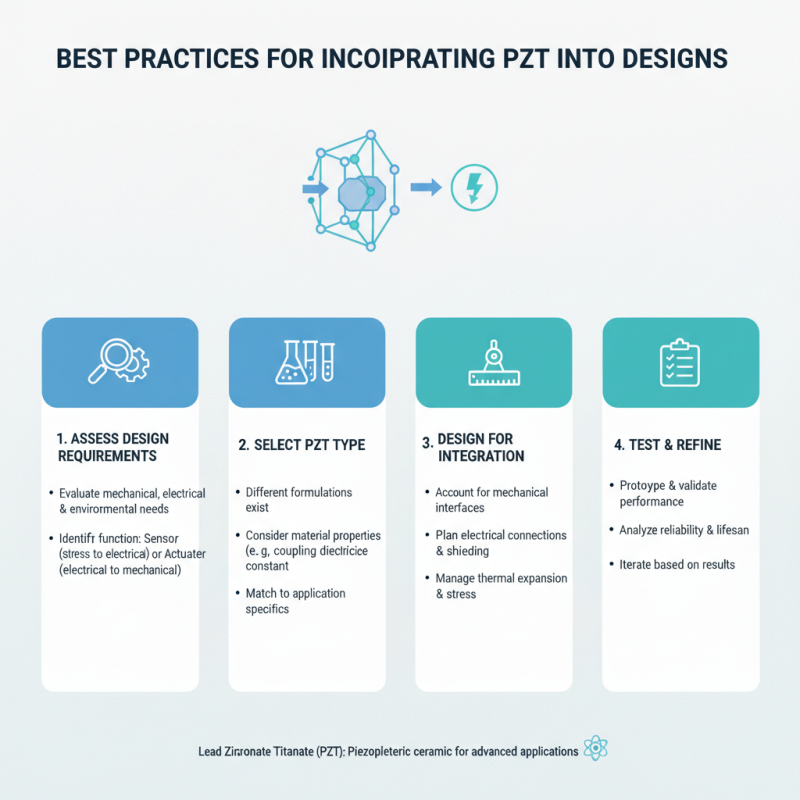
Incorporating PZT material into your projects can significantly enhance performance, but it requires careful consideration. Begin by assessing the specific requirements of your design. PZT, or lead zirconate titanate, is known for its piezoelectric properties. It converts mechanical stress into electrical energy. This feature is invaluable in applications like sensors and actuators. Select the right type of PZT for your needs. Different formulations exist, each with unique characteristics.
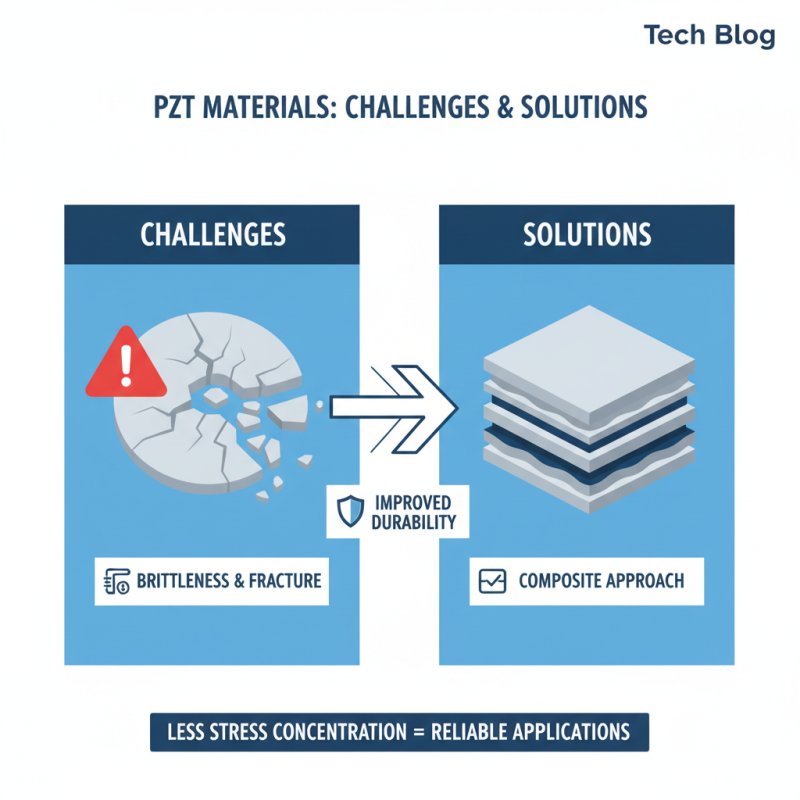
When integrating PZT, focus on mechanical and thermal stability. Pay close attention to bonding techniques. The connection between PZT and other materials affects performance. You might encounter challenges, such as brittleness; this can lead to crack propagation. Understand the limitations and devise solutions to mitigate risks. If you experience unexpected behavior in your prototypes, consider revisiting your initial design choices. Iteration is key in perfecting your approach.
Testing is essential. Ensure that your PZT components meet the necessary specifications. Conduct experiments under varying conditions to gauge their reliability. It's vital to document all findings. Reflect on the results to make informed adjustments. Your insights will contribute to more robust designs in future projects.
Testing and Evaluating PZT Performance in Real-World Scenarios
Testing and evaluating PZT materials in real-world scenarios is essential to ensure their effectiveness. The properties of PZT can vary significantly with temperature and pressure. It’s vital to simulate conditions that replicate end-use environments. Testing in controlled labs provides insights, but real-world scenarios reveal performance weaknesses.
Field tests can uncover issues not detected in lab settings. For instance, mechanical stress and humidity can influence PZT behavior. A material might perform excellently in isolation but fail when integrated into a device. It is crucial to assess durability and reliability under varied conditions. Gathering data over time helps in understanding long-term performance.
Collaboration with industry experts can enhance testing methods. Experienced professionals provide valuable insights into potential failures. However, it is important to remember that every testing phase may reveal limitations. Reflection on these limitations allows for iterative improvements. Ultimately, refining techniques based on real-world evaluations ensures better integration of PZT materials into projects.