In 2026, Piezo Disc Transducer selection is becoming a practical engineering decision, not a simple catalog purchase. These compact ceramic discs appear in buzzers, ultrasonic sensors, alarms, haptic interfaces, and fluid-level systems. A thin brass-backed disc may deliver a sharp acoustic pulse, while a multilayer design can provide stronger displacement at lower voltage. The difference matters inside a 30-millimeter enclosure.
Market data shows sustained demand. Fortune Business Insights estimates that the global piezoelectric devices market could grow from about USD 33.74 billion in 2024 to USD 54.11 billion by 2032. Grand View Research also reports strong expansion across sensing, automotive, medical, and consumer electronics applications. However, published forecasts use different product boundaries and revenue definitions. Buyers should compare assumptions, not headlines.
Kenji Uchino, a widely recognized piezoelectric-materials researcher, describes piezoelectricity as “a coupling phenomenon between mechanical and electrical energies.” That relationship explains why frequency, capacitance, resonance, mounting pressure, and drive voltage must be evaluated together. Experience in production also reveals a less comfortable truth: the cheapest disc may become the most expensive component after tuning, adhesive failures, or inconsistent sound output.
This 2026 guide compares common Piezo Disc Transducer types for global buyers. It examines construction, operating frequency, sensitivity, temperature stability, quality controls, and application fit. Certification and documentation deserve equal attention. A promising specification sheet is not enough. Test the real assembly. That step is often missed.
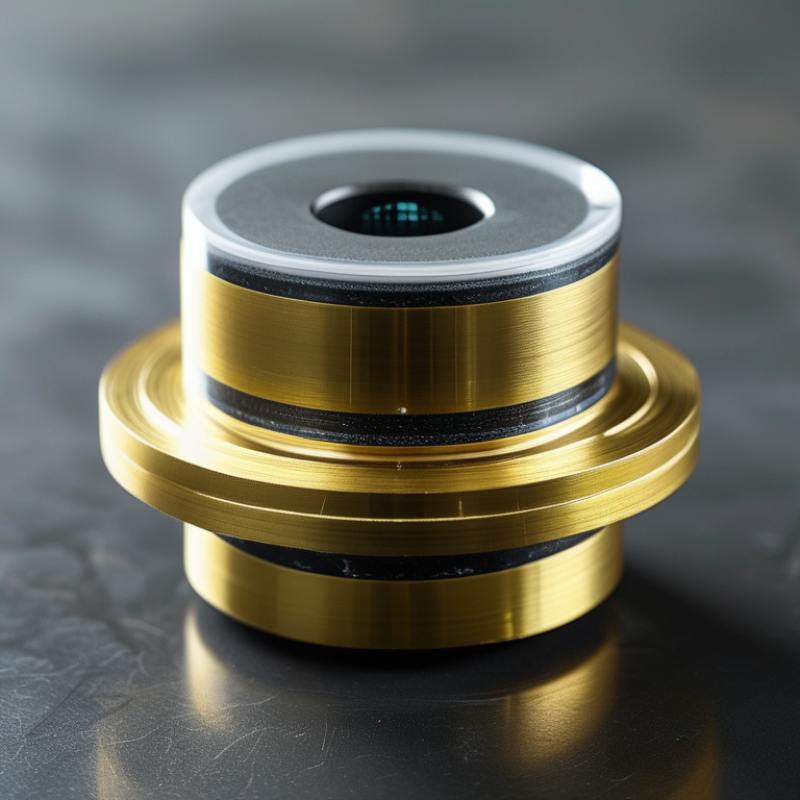
A piezo disc transducer is a thin ceramic element bonded to a metal disc. It converts electrical energy into mechanical vibration, or vibration into an electrical signal. When alternating voltage reaches the ceramic layer, its shape changes slightly. The metal disc then bends with it. This movement creates pressure waves in air, producing sound.
Very small movement matters.
Different disc structures suit different tasks. A brass-backed disc often provides a practical balance between strength, cost, and resonance. A bare ceramic disc may offer higher sensitivity, but it can be more fragile during assembly. In sensing applications, vibration bends the ceramic and generates a small voltage. Circuit design, mounting pressure, and operating frequency strongly affect the result. The same disc may perform well in one enclosure and poorly in another. That is easy to overlook.
Tips: Check the resonant frequency before purchasing. Test the disc inside its actual housing, not only on a workbench. Keep soldering time short, because excessive heat can weaken the ceramic bond. Avoid rigid mounting unless the design requires it. Measure sound pressure or signal output under stable conditions. A data sheet helps, but it does not replace testing. Real performance can vary between production batches, which makes a second sample worth considering.

Piezo disc transducers differ by structure, resonance, sensitivity, and environmental protection. Bare ceramic discs suit compact buzzers, alarms, and simple sound indicators. They are lightweight and economical, but exposed surfaces require careful handling.
Brass-backed discs offer stronger mechanical support and stable vibration. They are common in alert devices and low-power audio circuits.
Bimorph discs use two piezoelectric layers. Their larger bending movement helps produce stronger acoustic output at low voltage. They fit alarms, tactile feedback units, and small sensing systems.
Encapsulated or waterproof discs work better in humid equipment, outdoor panels, and fluid-level monitors. However, sealing can change resonance and reduce sensitivity.
A perfect choice rarely exists. Testing matters.
Tips:
Match the disc’s resonant frequency with the circuit before ordering. Check diameter, thickness, capacitance, operating voltage, and sound pressure level. For sensing, examine signal stability under temperature changes. For global purchasing, request tolerance data, test reports, packaging details, and material declarations. Mounting pressure also matters; uneven adhesive layers can weaken vibration. Many designs overlook this small detail. Start with sample testing, then confirm performance after repeated temperature and humidity exposure.
2026 Best Piezo Disc Transducer Types for Global Buyers
Material selection controls sensitivity, stability, cost, and compliance risk. Lead zirconate titanate ceramic delivers strong output and supports common ultrasonic frequencies near 40 kHz. Lead-free ceramics reduce material concerns, but performance can vary between batches. PVDF film is flexible and light, though its signal strength is usually lower. MarketsandMarkets’ 2024 piezoelectric devices report identifies sensing, actuation, and ultrasonic applications as major demand categories.
Size changes both resonance and sound pressure. A 27 mm disc may suit compact buzzers, while larger discs can produce stronger acoustic output at lower frequencies. Do not compare diameter alone. Check thickness, capacitance, resonance tolerance, and mounting conditions. A rigid adhesive layer can shift frequency. Small details matter.
Performance data should come from controlled tests. Record SPL or voltage output at a fixed distance, drive voltage, temperature, and load. Compare the same fixture. The U.S. Department of Energy’s 2024 critical materials assessment highlights supply-chain exposure for several advanced ceramic inputs, so buyers should request material declarations and batch traceability. The awkward truth: catalog resonance values are not always system resonance values. I would test samples before approving volume orders. Some suppliers report peak output without stating the measurement method. That is a weak comparison. Industry forecasts from Grand View Research also show continued growth in piezoelectric device demand, but market growth does not guarantee uniform quality. Specifications still need proof.
2026 Best Piezo Disc Transducer Types for Global Buyers
Global buyers should select piezo disc transducers by application, not appearance. A bare brass disc suits alarms, buzzers, and compact sensing circuits. Encapsulated versions offer better protection against dust, moisture, and handling damage. For vibration feedback, compare disc diameter, ceramic thickness, resonance frequency, and mechanical mounting conditions.
Frequency tolerance matters. A transducer tuned near its resonance can produce stronger sound with less drive power. However, real equipment may shift that frequency through housing design, adhesive, temperature, or assembly pressure. Test the complete device, not only the loose component. Check capacitance, impedance, sound pressure, operating voltage, and continuous duty limits. Small errors become costly in high-volume production.
Industry requirements also vary by region and sector. Buyers should request RoHS and REACH-related declarations when applicable, plus material information and batch traceability. Medical, automotive, industrial, and consumer products may require different environmental, reliability, or quality records. Ask for temperature cycling, humidity exposure, soldering, and aging data. A clean datasheet is not enough. I have seen promising samples fail after adhesive changes. That detail is easy to miss. Confirm packaging, lead configuration, minimum order quantity, and inspection methods before approval. Leave room for retesting, because laboratory results rarely match field conditions perfectly.
| Piezo Disc Type | Typical Diameter | Typical Operating or Resonant Frequency | Typical Capacitance | Typical Drive Requirement | Main Output or Function | Recommended Industries | Key Selection Criteria | Global Buyer Requirements |
|---|---|---|---|---|---|---|---|---|
| Bare Piezo Ceramic Disc | 10–50 mm | Approximately 1–10 kHz, depending on diameter, thickness, and mounting | Approximately 5–100 nF | Low-current AC excitation; voltage commonly selected according to the ceramic formulation and assembly design | Mechanical vibration, sound generation, or vibration sensing | Instrumentation Sensors Consumer Devices | Disc diameter, ceramic thickness, electrode structure, resonance stability, sensitivity, and mounting method | Dimensional tolerances, electrical insulation, batch consistency, RoHS and REACH documentation, protective packaging |
| Metal-Backed Piezo Buzzer Disc | 12–50 mm | Approximately 1–5 kHz for audible sound applications | Approximately 10–150 nF | AC or pulsed drive; circuit design must account for capacitive current and resonance | Audible alert, tone, alarm, or indicator sound | Appliances Security Systems Automotive Alerts | Sound pressure level, tone frequency, operating voltage, duty cycle, mounting cavity, and acoustic enclosure | Stable sound output, lead or terminal options, polarity marking where required, lot traceability, functional testing |
| Bimorph Piezo Disc or Bender | 20–80 mm overall active length or diameter | Approximately 100 Hz–5 kHz, depending on geometry and loading | Approximately 10–200 nF | Low-current AC or dynamic drive; displacement is affected by voltage, frequency, and mechanical load | Large mechanical displacement, low-frequency vibration, or airflow movement | Valves Micro-Pumps Actuators | Free displacement, blocked force, fatigue life, bending direction, attachment method, and allowable mechanical stress | Mechanical protection, moisture-resistant packaging, repeatable flex performance, inspection of bonding and alignment |
| Ultrasonic Piezo Disc | 10–35 mm | Approximately 20–400 kHz; common designs are centered around a specified narrow operating band | Approximately 0.5–10 nF | Short AC pulses or continuous AC drive at the specified resonant frequency | Ultrasonic transmission, reception, ranging, detection, or material inspection | Level Sensing Distance Measurement Flow Measurement NDT | Center frequency, bandwidth, acoustic matching layer, sensitivity, beam angle, temperature drift, and ringing time | Frequency calibration, impedance data, environmental testing, connector compatibility, technical drawings, export-safe packaging |
| Piezo Contact or Vibration Sensor Disc | 12–35 mm | Approximately 100 Hz–10 kHz usable sensing range; resonance may occur within or above this range | Approximately 10–200 nF | Passive signal source; requires a high-impedance amplifier or charge-sensitive interface | Vibration, impact, acoustic contact, structural movement, or knock detection | Condition Monitoring Musical Instruments Security Devices | Sensitivity, noise level, mounting adhesive, cable capacitance, frequency response, and mechanical isolation | Shielded leads when needed, ESD-safe handling, sensitivity inspection, moisture protection, consistent cable termination |
| High-Temperature Piezo Disc Assembly | 10–50 mm | Application-specific; frequency must be verified after exposure to the target temperature | Design-specific, commonly within the same range as comparable ceramic discs | Drive level must be limited to prevent excessive dielectric and mechanical heating | Sensing or actuation in elevated-temperature environments | Industrial Equipment Engine Systems Process Monitoring | Maximum continuous temperature, thermal cycling, depolarization risk, insulation resistance, sealing, and attachment material | Temperature test reports, material declarations, thermal aging data, lot identification, and application-specific qualification |
| Encapsulated Piezo Disc Module | 15–60 mm housing diameter or equivalent module size | Approximately 1–100 kHz, depending on whether the module is designed for audible or ultrasonic use | Module-specific; commonly measured together with cable and protective electronics | AC, pulse, or conditioned sensor interface according to the integrated circuit design | Protected sounder, sensor, or transducer module for field installation | Outdoor Equipment Smart Meters Industrial Controls | Ingress protection, connector type, cable length, operating temperature, vibration resistance, and service life | IP rating evidence where applicable, UV and moisture resistance, customs documentation, packaging drop protection, compliance files |
| Multi-Element Piezo Disc Array | Custom; commonly 25–100 mm total assembly size | Application-specific; elements may be operated at one frequency or across multiple channels | Depends on the number of elements and parallel or series connection | Multi-channel AC or pulse drive with controlled phase, amplitude, and impedance matching | Beam steering, higher acoustic output, directional sensing, or redundant detection | Robotics Imaging Automation | Element matching, channel isolation, array geometry, acoustic crosstalk, calibration, and system-level impedance | Configuration control, test records for every channel, connector pinout documentation, anti-static packing, engineering change control |
Selecting a piezo disc transducer starts with the application, not the lowest quoted price. Buzzer discs suit audible alerts, while sensor discs support vibration and impact detection. Some hybrid designs can perform both tasks, but their output may be less predictable.
Quality checks should include diameter, thickness, capacitance, resonant frequency, impedance, sensitivity, and operating temperature. Ask for measured data, not typical values alone. Ceramic polarization must remain stable after heating, bonding, and repeated vibration. Review material declarations and applicable safety documentation for each destination market. A reliable supplier should provide traceable inspection records, sample results, and clear tolerance limits. Still, a perfect datasheet is not enough. In practical sourcing, adhesive coverage and uneven electrode surfaces can affect performance.
Tips: Request samples from two production lots. Test them in your actual housing, because enclosure size changes sound pressure and resonance. Compare factory-direct purchasing, authorized distribution, and contract manufacturing. Direct sourcing may reduce cost, but it often requires stronger incoming inspection and communication. Distributors can offer faster delivery and smaller quantities, although technical customization may be limited. Before placing a bulk order, confirm minimum order quantity, packaging protection, lead time, payment terms, and pre-shipment inspection. Keep a written approval sample. It prevents quiet specification changes later. Small mistakes happen, especially when drawings use different units. Have an engineer review every critical dimension.