2026 How to Choose the Best Piezoelectric Ceramic Disc?
In the realm of advanced manufacturing and engineering, the selection of the right Piezoelectric Ceramic Disc is crucial. These components play a significant role in various applications, including sensors, actuators, and energy harvesting devices. According to market research by Fortune Business Insights, the global piezoelectric ceramics market is projected to reach $2.75 billion by 2026. This highlights the growing demand for high-quality components.
Choosing a Piezoelectric Ceramic Disc requires a keen understanding of material properties and performance metrics. Factors such as resonance frequency, dielectric constant, and mechanical strength must be considered. Many manufacturers may overlook these critical aspects, leading to suboptimal performance in their applications. As a result, it is essential to consult expert opinions and reviews to ensure the chosen disc meets specific requirements.
Moreover, the process of selecting the best disc can be daunting. Potential users often struggle with the myriad of options available. Detailed insights into the product specifications can provide clarity. However, it is vital to recognize that not all available data is comprehensive or reliable. Therefore, verification of manufacturer claims is necessary to make informed decisions.
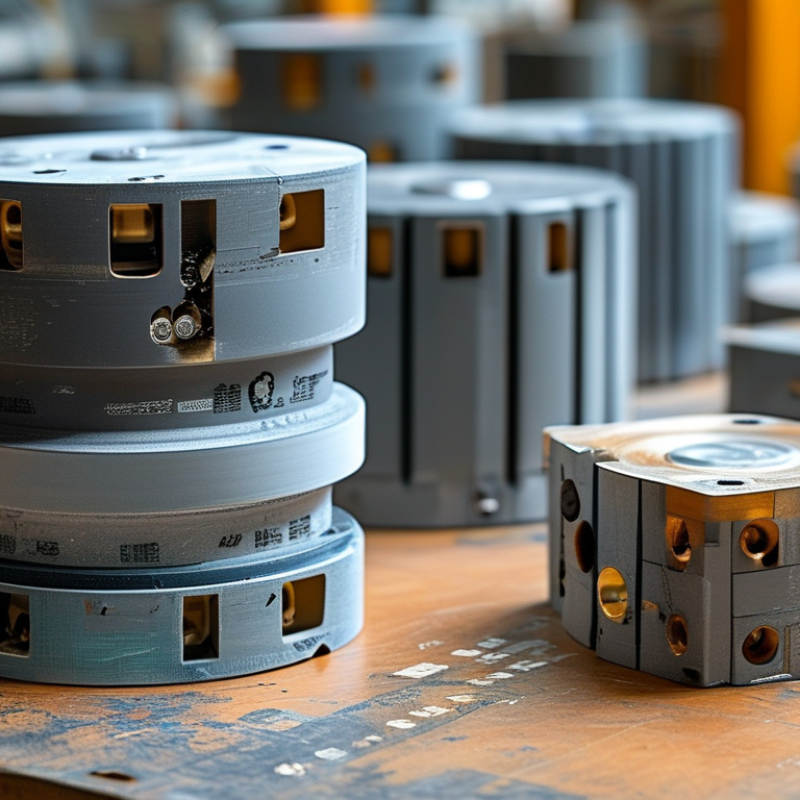
Understanding Piezoelectric Ceramics: Key Properties and Applications
Piezoelectric ceramics possess unique properties that make them indispensable in various applications. These materials can generate an electric charge when subjected to mechanical stress. This effect is reversible, enabling them to also change shape when an electric field is applied. This dual functionality is valuable in sensors, actuators, and even in energy harvesting technologies. Understanding these key properties is essential for effective application in modern technology.
The choice of piezoelectric ceramic is often crucial. Factors such as temperature stability and mechanical strength influence performance. For instance, high-temperature applications demand specific ceramic compositions that can withstand thermal stress. Additionally, the size and shape of the ceramic disc may affect its responsiveness. You might find that a larger disc generates a stronger output, but it also requires more careful handling. Selecting the appropriate material often involves a trade-off between different performance characteristics, which can sometimes be challenging.
When exploring piezoelectric ceramics, one must reflect on the reliability of the chosen materials. Variability in manufacturing processes can lead to inconsistencies. It's essential to scrutinize the specifications of these ceramics closely. This attention to detail ensures optimal results in your specific applications. Choosing the best ceramic requires patience and thorough understanding, contributing to long-term project success.
Identifying the Right Specifications for Piezoelectric Ceramic Discs
When selecting piezoelectric ceramic discs, it’s essential to evaluate their specifications based on application needs. The most critical factors include resonant frequency, capacitance, and mechanical quality factor. Resonant frequencies, typically ranging from 1 kHz to over 100 kHz, impact device response. Higher frequencies can improve performance but may complicate design.
Capacitance is another vital parameter. It generally varies with size, with larger discs offering greater capacitance. Some industry reports indicate a smooth and reliable output at capacitances between 10 nF and 100 nF. Understanding the mechanical quality factor, which affects efficiency, is crucial. Values range from 30 to over 100, influencing energy conversion rates significantly.
Crafting an optimal selection process involves iteration. Initial data might seem adequate, but real-world applications often reveal unexpected results. Testing under actual conditions can lead to insights not present in initial specifications. Enhancing knowledge through practical experience is essential in this complex field, enabling better decision-making over time.
2026 How to Choose the Best Piezoelectric Ceramic Disc? - Identifying the Right Specifications for Piezoelectric Ceramic Discs
| Specification |
Description |
Typical Values |
| Diameter |
The size of the ceramic disc. |
10 mm, 20 mm, 30 mm |
| Thickness |
The thickness of the disc, which affects the frequency response. |
0.5 mm, 1 mm, 2 mm |
| Resonant Frequency |
The frequency at which the disc naturally resonates. |
5 kHz, 10 kHz, 20 kHz |
| Capacitance |
The ability of the ceramic disc to store electrical energy. |
10 nF, 50 nF, 100 nF |
| Material Type |
The composition of the ceramic used in the disc. |
PZT, PVDF, Barium Titanate |
| Operating Temperature |
The temperature range in which the disc can operate effectively. |
-40°C to 120°C |
| Mechanical Quality Factor (Qm) |
A measure of the energy losses in the material. |
100, 200, 300 |
Evaluating Material Composition: Lead-Based vs. Lead-Free Ceramics
The choice between lead-based and lead-free piezoelectric ceramics is significant in various applications. Lead zirconate titanate (PZT) is a well-known lead-based ceramic. According to recent studies, PZT exhibits a high piezoelectric constant, exceeding 300 pC/N. This makes it suitable for high-performance sensors and actuators. However, lead-based materials raise environmental concerns due to toxicity. Regulations worldwide are pushing for alternatives.
Lead-free ceramics like sodium potassium niobate (NKP) are gaining attention. NKP shows promising piezoelectric properties, with constants around 200 pC/N, which is competitive. Manufacturers face challenges in achieving optimal performance without lead. Research suggests that ongoing advancements in material processing enhance the properties of lead-free ceramics. Despite these improvements, performance can vary significantly across formulations.
A report by the International Journal of Applied Ceramic Technology emphasized the need for standardization in lead-free ceramic production. This ensures consistent performance and reliability. Understanding the trade-offs in material composition is crucial. Piezoelectric ceramic discs must meet specific application requirements while adhering to safety regulations. Careful evaluation is necessary for selecting the right composition.
Assessing Frequency Response: Matching Discs with Application Needs
When selecting a piezoelectric ceramic disc, understanding frequency response is crucial. Different applications require specific frequencies for optimal performance. For example, a disc designed for sensors may need to operate at lower frequencies, while those used in ultrasonic applications require higher frequencies. Identifying the right frequency response can greatly enhance the efficiency and reliability of the device.
Matching discs to application needs is not always straightforward. The characteristics of piezoelectric materials can vary significantly based on their composition and structure. It's important to consider factors such as temperature stability and mechanical stress. Testing under conditions similar to real-world scenarios is vital. Discrepancies in performance during testing might highlight changes needed in the selection process.
Finally, always revisit your choices. The demands of the application may evolve. A disc that once performed well may no longer meet new requirements. Continuous assessment ensures that the selected piezoelectric ceramic disc remains aligned with the intended application goals. Adaptability and informed decision-making are key to successful implementation.
Frequency Response of Piezoelectric Ceramic Discs
This chart illustrates the frequency response characteristics of various piezoelectric ceramic discs. Selecting a disc with the appropriate frequency response is crucial for matching application requirements, ensuring optimal performance in devices such as sensors and actuators.
Choosing Manufacturers: Evaluating Quality Control and Certification Standards
When selecting piezoelectric ceramic discs, quality control is fundamental. Manufacturers should adhere to rigorous certification standards. This ensures the products meet critical performance levels. Examining these standards can save you from future issues. Certificates indicate compliance with industry benchmarks.
Understanding the production processes is also crucial. Check if suppliers conduct regular tests. This may involve thermal stability assessments and mechanical stress evaluations. Transparent reporting of these results builds trust. If a manufacturer is hesitant to share, raise your concerns.
Tips for choosing the right manufacturer: Look for ISO certifications and their adherence to strict testing protocols. Verify the reputation of the company through reviews from past customers. Consider visiting the production site if possible. This gives insight into their operational practices and commitment to quality. The level of detail in their documentation can reveal their expertise.