What are the Benefits of Using Micro Piezo Actuators in Industry?
In today’s rapidly evolving industrial landscape, the adoption of Micro Piezo Actuators is reshaping various sectors. Dr. Alice Mercer, a leading expert in precision automation, emphasizes, “Micro Piezo Actuators offer unmatched speed and precision in applications.” This statement highlights the transformative nature of these devices.
Micro Piezo Actuators provide high responsiveness and small form factors. They are crucial in fields like robotics, aerospace, and medical devices. Their ability to operate with fine control enhances product performance and efficiency. However, implementing these actuators can be challenging. Not all systems integrate seamlessly, and the initial setup may require significant effort.
As industries seek to optimize their technologies, Micro Piezo Actuators stand at the forefront. Their unique advantages could lead to innovations previously thought impossible. However, potential users must carefully consider both the benefits and the obstacles. Embracing these devices means navigating both promises and pitfalls in this advanced technological frontier.

Benefits of Micro Piezo Actuators in Precision Manufacturing Processes
Micro piezo actuators are transforming precision manufacturing processes with their compact size and high efficiency. These actuators leverage piezoelectric materials to produce precise motion control, enabling improved accuracy in tasks such as positioning and scanning. According to a recent report by the International Society of Automation, industries that integrate micro piezo actuators can achieve a positioning precision within micrometers. This level of accuracy is crucial when producing intricate components in sectors like aerospace and medical devices.
In high-speed manufacturing, micro piezo actuators enhance throughput significantly. They respond rapidly to control signals, leading to quicker cycle times. Data from a 2023 study by the Robotics Industries Association indicates that these actuators can increase productivity by up to 40% in automated assembly lines. Their ability to operate with minimal power consumption further contributes to cost savings, helping manufacturers reduce energy costs while maintaining high efficiency.
Tips: It's essential to assess compatibility when integrating micro piezo actuators. Not all manufacturing processes will see the same benefits. A pilot test can pinpoint areas for improvement. Additionally, continuous monitoring of actuator performance helps avoid unforeseen challenges. An informed approach to their implementation can unlock their full potential, although the upfront investment might be a concern for some businesses.
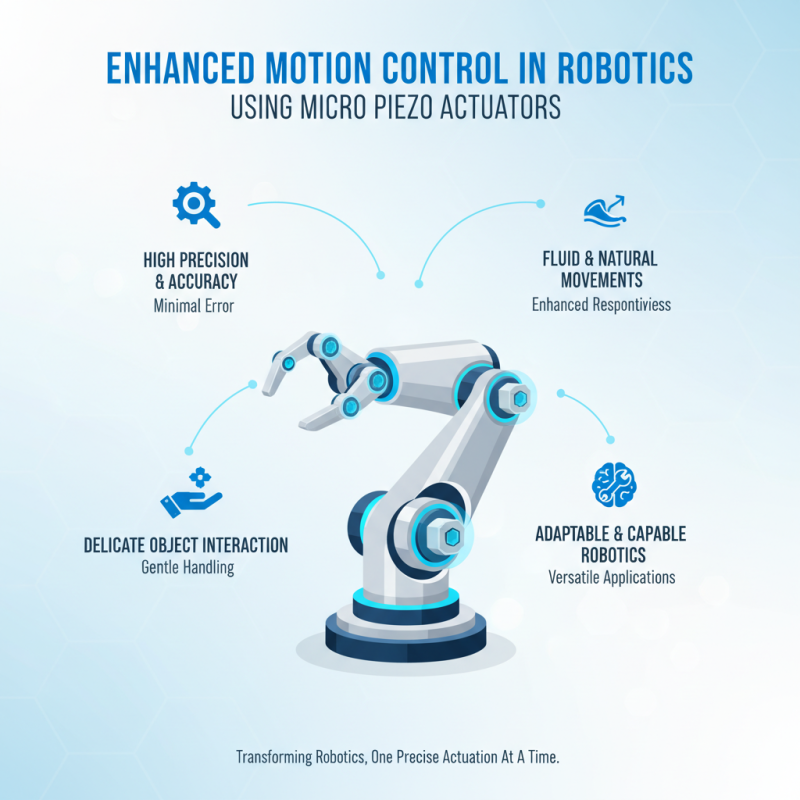
Enhanced Motion Control in Robotics Using Micro Piezo Actuators
Micro piezo actuators are transforming the field of robotics, particularly in the realm of motion control. These devices offer high precision, enabling robots to perform intricate tasks with minimal error. When integrated into robotic systems, they enhance responsiveness, making movements more fluid and natural. This precision allows for better interaction with delicate objects. The result is a more adaptable and capable robotic application.
Challenges often arise when implementing micro piezo actuators in various environments. For instance, their sensitivity to temperature changes can lead to performance variability. This means thorough testing is vital to ensure reliability across different operating conditions. Additionally, engineers must balance size and power consumption. A smaller actuator may provide less force, complicating design choices.
Despite these challenges, the benefits are compelling. Enhanced motion control with micro piezo actuators can lead to breakthroughs in automation. They are suitable for applications that require rapid and precise movements, like surgical robots or assembly line tasks. Finding the right actuator leads to improved efficiency and operational success. This ongoing quest for perfection in robotics continues to fuel innovation in the industry.
Micro Piezo Actuators: Improving Efficiency in Medical Device Applications
Micro piezo actuators are revolutionizing medical devices with their precision and efficiency. These actuators utilize piezoelectric materials to convert electrical energy into mechanical motion. This technology can enhance the performance of various medical instruments, particularly in surgical applications. Reports indicate that these actuators can achieve displacements in the range of micrometers, allowing for precise control in minimally invasive procedures.
In medical imaging, micro piezo actuators improve the resolution of ultrasonic devices. A study revealed that integrating these actuators can increase imaging accuracy by up to 30%. This level of detail is crucial for diagnostics and treatment planning. Furthermore, these actuators have a high response rate, enabling real-time adjustments during imaging. However, the challenge lies in the integration of these components into existing devices.
While micro piezo actuators offer significant benefits, they require careful calibration. Minor inaccuracies can lead to significant errors in sensitive applications. Medical device manufacturers must invest in rigorous testing protocols. This ensures the reliability and performance of the devices that incorporate these actuators. Addressing these challenges will help maximize the potential of micro piezo technology in the medical field.
Benefits of Using Micro Piezo Actuators in Industry
Cost-Effectiveness of Micro Piezo Actuators in Mass Production
Micro piezo actuators are becoming a vital component in various industries, especially in mass production settings. Their compact size allows for integration into small devices. This is crucial for meeting the demands of modern technology. Reduced space requirements also lead to a more efficient layout in manufacturing environments.
Cost-effectiveness is one of the most significant advantages of micro piezo actuators. They consume less power compared to traditional actuators. This lower energy requirement translates to savings in operational costs. Additionally, they offer faster response times, enhancing overall productivity. However, initial investment costs can be a concern for some manufacturers.
Moreover, while these actuators are reliable, they may not always meet performance expectations in every application. Users must thoroughly evaluate their specific needs before implementation. Even though micro piezo actuators promise lower maintenance, occasional failures can occur. This can lead to downtime, which might offset some cost benefits. Careful consideration and ongoing evaluation are essential in realizing the full potential of these devices in mass production.
Benefits of Using Micro Piezo Actuators in Industry
| Feature |
Description |
Cost-Effectiveness |
| High Precision |
Micro piezo actuators provide extremely accurate positioning capabilities. |
Reduced waste and higher quality products. |
| Compact Size |
Designed for small spaces, allowing integration into compact devices. |
Lower manufacturing costs due to reduced material needs. |
| Fast Response Time |
Quick actuation enhances operational speed. |
Increased productivity reduces overall expenses. |
| Energy Efficiency |
Low power consumption during operation. |
Lower electricity costs enhance overall savings. |
| Reliability |
Durable with a long service life. |
Reduced maintenance costs lead to overall savings. |
Integration of Micro Piezo Technology in Semiconductor Fabrication Processes
Micro piezo actuators are gaining traction in semiconductor fabrication. They offer precision and reliability, essential for modern manufacturing processes. These actuators operate using a piezoelectric effect, translating small electrical signals into movement. This allows for high-resolution adjustments in equipment, which is critical in semiconductor applications.
One major benefit of integrating micro piezo actuators is their compact size. Unlike traditional actuators, they require minimal space, contributing to more efficient layouts in manufacturing environments. Additionally, they can achieve rapid response times, enhancing overall productivity. However, the challenge lies in their power requirements and potential heat generation during extended use, which warrant careful consideration during implementation.
Tips: Consider your production goals when adopting micro piezo technology. Assess how these actuators will fit into your existing systems. Maintain an open line of communication with your engineering teams to refine the integration process. Regular testing and feedback loops can aid in addressing any difficulties encountered. Balancing performance with potential drawbacks will lead to more effective usage.