Best Active Piezo Buzzer for Global Buyers and Suppliers?
Active Piezo Buzzers are essential components in many electronic devices. They convert electrical energy into sound, enabling communication and alerts. According to industry reports, the global active piezo buzzer market is projected to grow significantly, reaching USD 1.5 billion by 2028. This growth highlights the increasing demand for these components across various sectors, including automotive and consumer electronics.
Choosing the best Active Piezo Buzzer requires understanding specific application needs. Factors include sound output, size, and power consumption. Some manufacturers provide detailed specifications, but not all meet industry standards. This can lead to challenges for buyers seeking reliable products. Recent studies indicate that nearly 30% of companies report difficulties in sourcing high-quality buzzers.
Evaluating suppliers is crucial for ensuring product reliability. A strong reputation can signify dependability in performance. However, the market is flooded with options, making it hard to distinguish quality. It is essential to partner with suppliers who maintain strict quality control measures. By focusing on these elements, buyers can navigate the market more effectively.
Best Active Piezo Buzzer Types for Global Buyers and Suppliers
Active piezo buzzers are essential components in various electronic devices, from alarms to toys. Their popularity is on the rise among global buyers and suppliers. The distinct sound production mechanism makes them favorable for many applications. A report by Industry Research stated that the global piezoelectric devices market is projected to reach $35 billion by 2028, reflecting a growing demand.
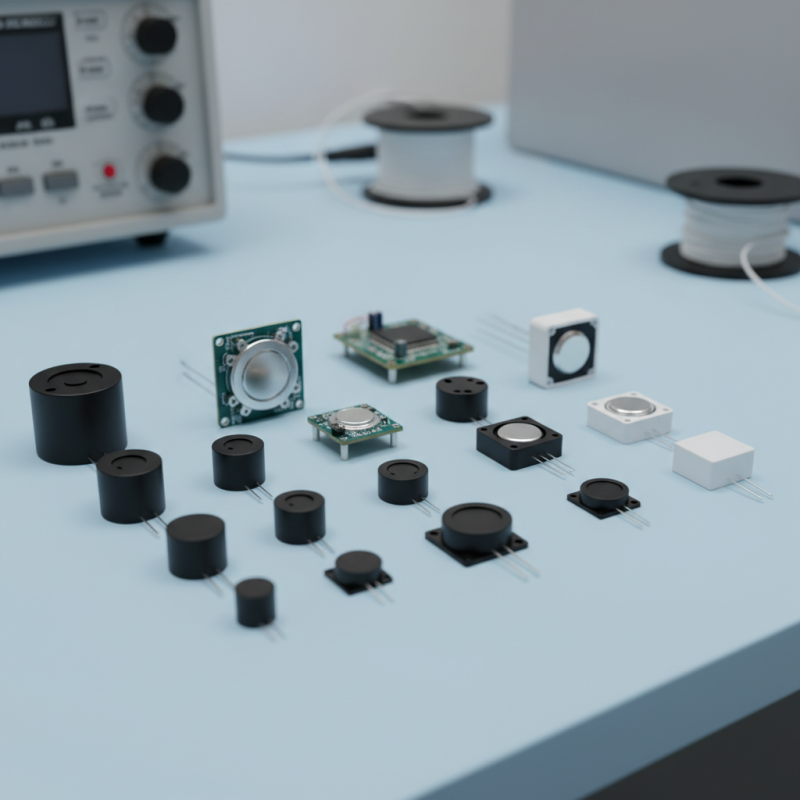
Among the types available, surface mount and through-hole buzzers are frequently sought after. Surface mount buzzers offer convenience in modern electronics design. They occupy less space and allow for automated assembly. On the other hand, through-hole buzzers are preferred for their durability and ease of hand soldering. Both types have their strengths and weaknesses that should be carefully considered.
Buyers should also note the variations in frequency and sound output levels. Typically, operational frequencies range from 2 kHz to 4 kHz. This variation affects the perceived volume and pitch of the sound. Moreover, differences in size impact the buzzer's performance in specific applications. Understanding these nuances is crucial for making informed purchasing decisions. It is vital to analyze specific requirements rather than settling for the most popular options.
Active Piezo Buzzer Types Distribution
Key Specifications to Consider When Choosing Active Piezo Buzzers
When selecting active piezo buzzers, several key specifications should be prioritized. Frequency response is crucial, as it determines the pitch and overall sound quality. Typical frequencies range from 2 kHz to 4 kHz, which are ideal for human hearing. According to industry reports, buzzers within this frequency range can effectively communicate alerts and notifications in various applications.
Another important specification is sound output, measured in decibels (dB). Most active piezo buzzers produce sound levels between 70 dB to 100 dB at 10 cm, which influences their suitability in different environments. A higher dB rating means louder alerts, useful in noisy settings. However, achieving a balance between sound level and power consumption is vital for energy efficiency.
Additionally, size and shape cannot be overlooked. Compact designs fit easily into devices without compromising functionality. Yet, the physical dimensions also affect sound projection. A buzzer that is too small might struggle to produce clear sounds, prompting buyers to reflect on their specific application requirements. Understanding these specifications helps global buyers make informed decisions for optimal performance and reliability in their products.
Best Active Piezo Buzzer for Global Buyers and Suppliers
| Model |
Frequency (kHz) |
Voltage (V) |
Sound Level (dB) |
Operating Temperature (°C) |
| Model A |
2.5 |
5 |
85 |
-20 to 70 |
| Model B |
3 |
12 |
90 |
-30 to 85 |
| Model C |
4 |
24 |
95 |
-20 to 70 |
| Model D |
3.5 |
9 |
88 |
-10 to 60 |
Market Trends: Demand and Supply Analysis of Piezo Buzzers in 2023
The demand for piezo buzzers is seeing significant growth in 2023. Various industries utilize these components for alarms, notifications, and signaling purposes. According to recent market analysis, the global market for piezo buzzers is projected to grow by 6% annually. This growth highlights the integral role piezo buzzers play across sectors like automotive, consumer electronics, and medical devices.
Supply chain dynamics are also evolving. Major manufacturers are facing challenges in sourcing raw materials, which can impact production timelines. Furthermore, a report from the International Electrotechnical Commission noted that harmonization of production standards is critical. As manufacturers strive to meet rising demand, the challenge of ensuring consistent quality remains a point of concern. Stakeholders must adapt to these changes to maintain competitive advantages.
Consumer preferences are shifting too. Users are seeking more compact and efficient designs without sacrificing sound quality. Data suggests that piezo buzzers with improved energy efficiency and form factor are in high demand. As developers innovate, some designs may not fully meet industry standards, prompting further reflection on quality controls and testing processes. This push for improvement is essential for sustaining market momentum.
Leading Manufacturers of Active Piezo Buzzers: A Comparative Review
Active piezo buzzers are vital in various industries, from automotive to electronics. These components produce sound through electromechanical transduction. The global market for piezo buzzers is expected to grow steadily, projected to reach USD 2.5 billion by 2026, driven by increasing demand in consumer electronics.
Leading manufacturers of active piezo buzzers often emphasize reliability and sound efficiency. Reports indicate that buzzers with a frequency range of 2 kHz to 4 kHz are particularly effective in alarm systems. Notably, the production techniques employed, such as thickness optimization of the piezoelectric material, significantly influence sound output and energy consumption.
Nevertheless, quality varies across different suppliers. Some buzzers may not meet durability standards, leading to performance issues. Inconsistent quality can challenge manufacturers relying on these components for critical applications. Understanding these discrepancies is crucial for global buyers when sourcing piezo buzzers.
Application Areas of Active Piezo Buzzers: From Consumer Electronics to Industry
Active piezo buzzers are increasingly used in various sectors, from consumer electronics to industrial applications. In the consumer electronics market, they serve as vital components in alarms, notifications, and interfaces. According to a report by Market Research Future, the global active piezo buzzer market is projected to reach USD 1.2 billion by 2025, growing at a CAGR of 12%. This growth is primarily driven by the rising demand for portable electronic devices and smart home products.
In industrial settings, active piezo buzzers are crucial for signaling and alert systems. They are often used in machinery to indicate faults or operational states. The World Industrial Report notes that over 30% of factory machinery incorporates sound signaling devices, including piezo buzzers. These devices enhance workplace safety by promptly alerting employees to potential hazards. However, the challenge remains in selecting the correct frequency and volume levels to ensure they are effective without being intrusive.
While the applications of active piezo buzzers are extensive, the industry faces some challenges. Variations in sound performance and environmental durability can affect reliability. There is a growing emphasis on developing buzzers that can operate consistently in extreme conditions, which remains an area needing improvement. As demand evolves, suppliers must adapt to ensure that the technology addressed customer needs effectively.